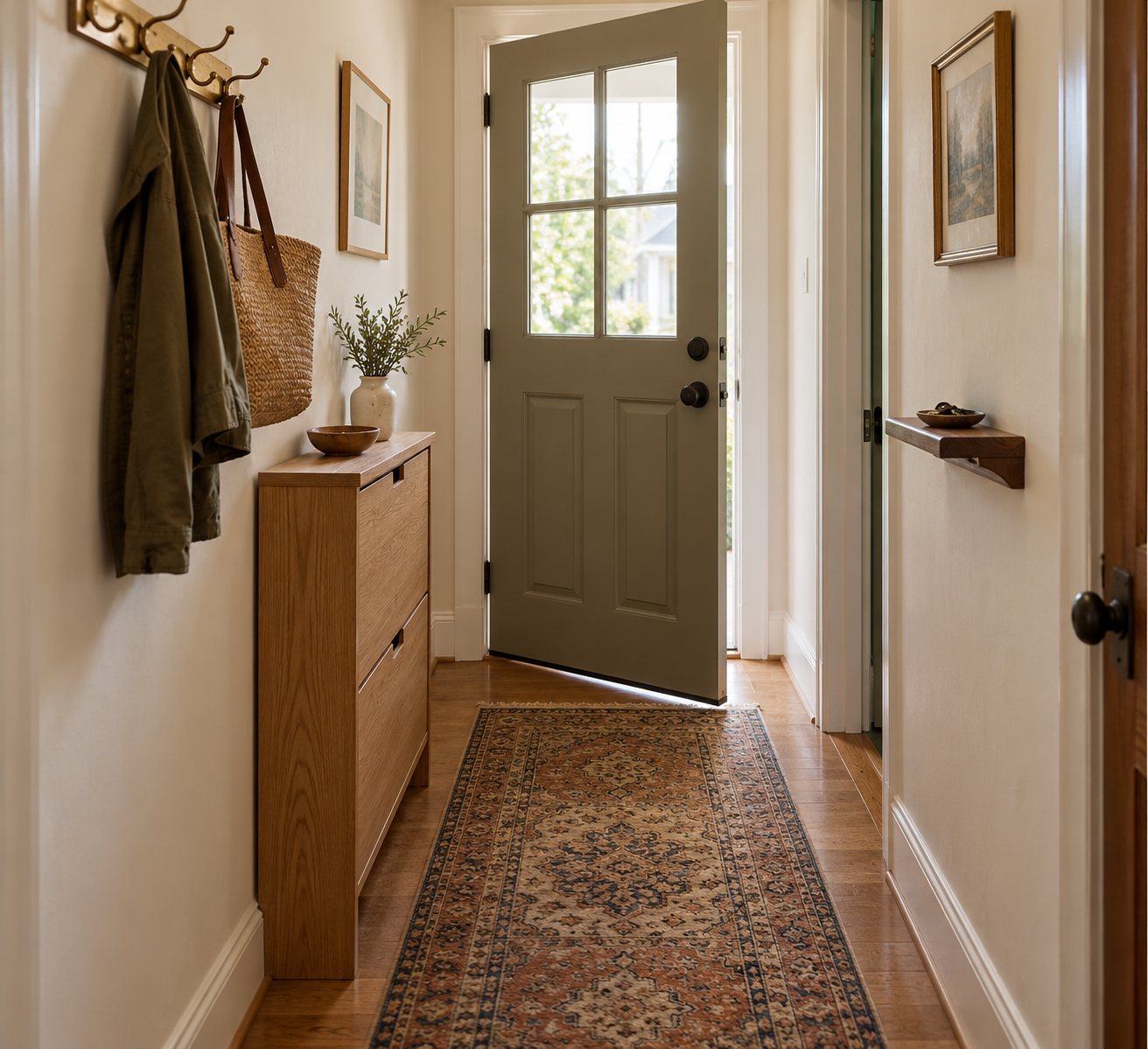
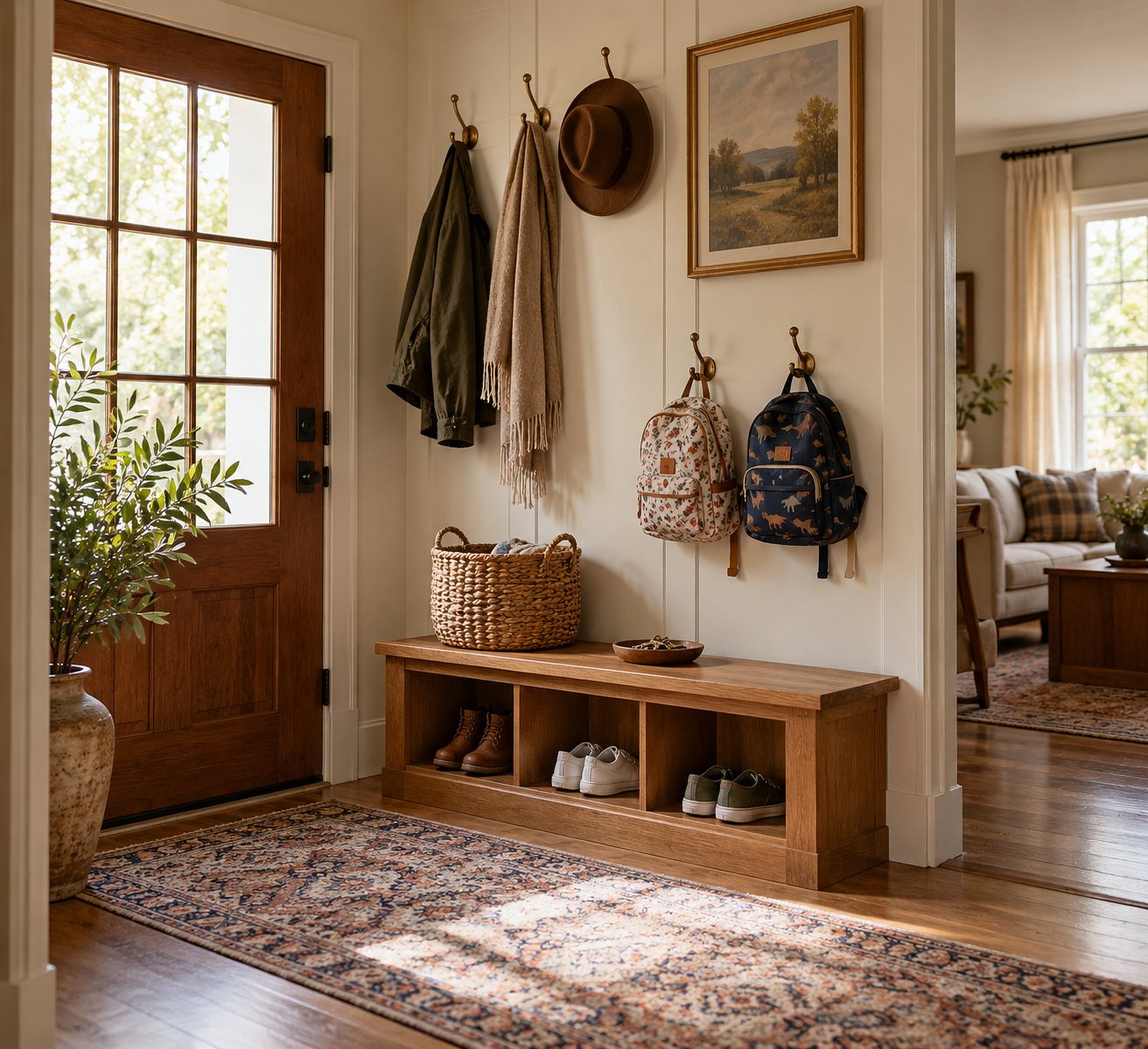
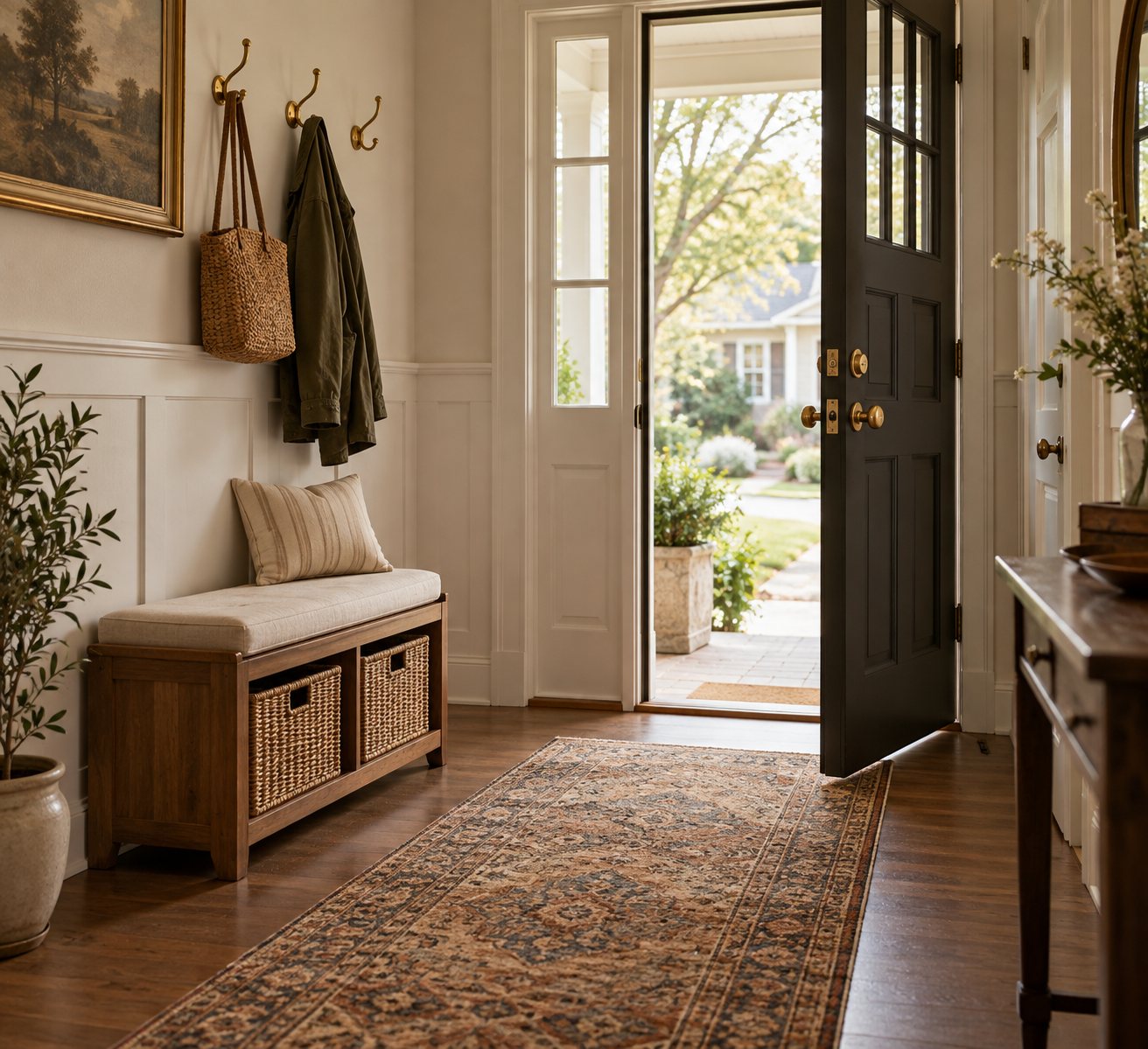
The best small entryway storage ideas make room for shoes, coats, bags and keys without crowding the space. When everything lands in the same few square feet, adding another piece of furniture can make the entry harder to use. The best storage for a small entryway uses the walls before it uses the floor. Start with hooks for everyday bags and coats, give shoes one contained home, add a small landing spot for keys, and use closed storage wherever visual clutter builds up. Only add a bench or console if it earns the floor space it takes.
A small entryway is a transition zone, not a miniature storage room. Store the things your household reaches for on the way in or out; move seasonal overflow elsewhere. That balance is what makes an entryway storage system feel calm and stay usable.
As an Amazon Associate, Your Home Revival earns from qualifying purchases.
Shop the Post: Our 10 Favorite Finds
Beautiful storage can be practical, too. These ten favorites bring together warm wood, antique-inspired metal finishes, woven texture, and quietly useful pieces for an entryway that feels collected rather than cluttered.
Explore the full edit below, then keep reading for styling ideas and more options for every space.



What Is the Best Storage for a Small Entryway?
The best small-entryway storage is a compact system: wall hooks for daily coats and bags, one contained shoe zone, a small landing place for keys, and closed storage for the categories that look messy. Add a bench, console, or cabinet only when its function justifies its footprint.
Think in this order: use the wall first, contain daily shoes, choose one landing zone, hide the clutter that reads as visual noise, then consider floor-standing furniture. This order keeps a narrow foyer from becoming a storage aisle.
| Problem | Best first solution |
|---|---|
| Shoes everywhere | One shallow closed cabinet or defined shoe area |
| Coats and bags | A wall hook rail at reachable heights |
| Keys and sunglasses | A wall shelf or very small landing surface |
| Kids’ backpacks | Low, easy-to-reach hooks |
| Need a seat | A storage bench only if its depth leaves a clear path |
| Almost no floor space | Wall-mounted hooks and a compact shelf |
| No coat closet | Hooks, a contained shoe zone, and seasonal storage elsewhere |
Storage capacity and good entryway function are not the same thing. A tall cabinet may hold more, but if a door hits it or people have to turn sideways to pass, it is the wrong fit. Measure and assess the route through the space before shopping.
1. Use the Walls Before You Use the Floor
THE YHR EDIT
Wall Hooks & Rails
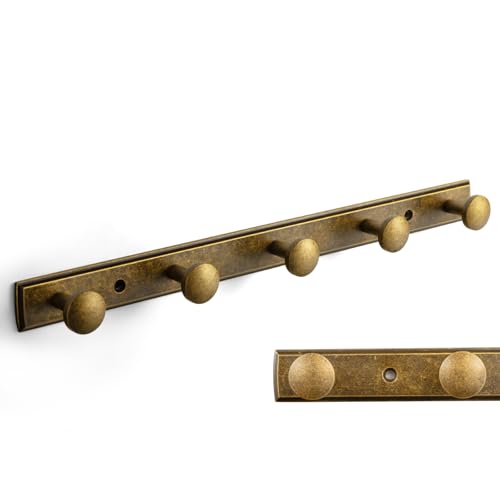
A row of handsome hooks makes a narrow entry feel considered. Warm wood and brass finishes add character without taking up floor space.
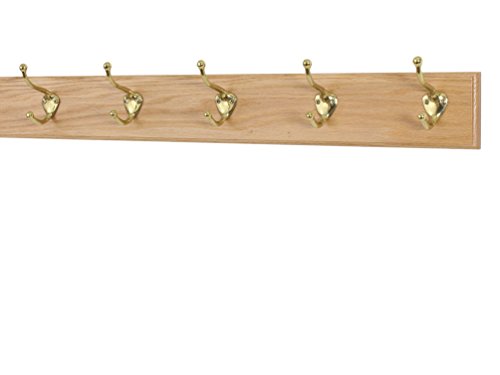
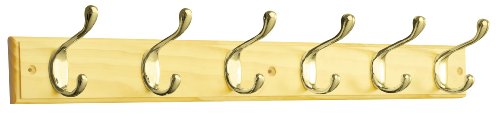
In a narrow entry, wall space is usually the most valuable storage surface because it adds function without projecting into the walking path. A short row of individual hooks, a wood hook rail on Amazon, or a simple peg rail can handle the coat and bag used most often. Keep the number of hooks in proportion to the number of items that truly belong by the door; filling every hook just invites the entryway to become a closet without doors.
A small shelf above the hooks can hold a few less-used items, while lower hooks make it possible for children to hang their own backpacks. If you need more than one height, leave enough visual breathing room between rows so coats do not bunch together. Wall-mounted cubbies can work in a wider foyer, but they are rarely the best choice for a tight passage.
Vertical storage is useful precisely because a narrow entry has so little floor area. It is not a reason to cover every wall. One functional wall is often enough; keep the opposite side open when possible so the entry still feels like a passage, not a corridor of storage.
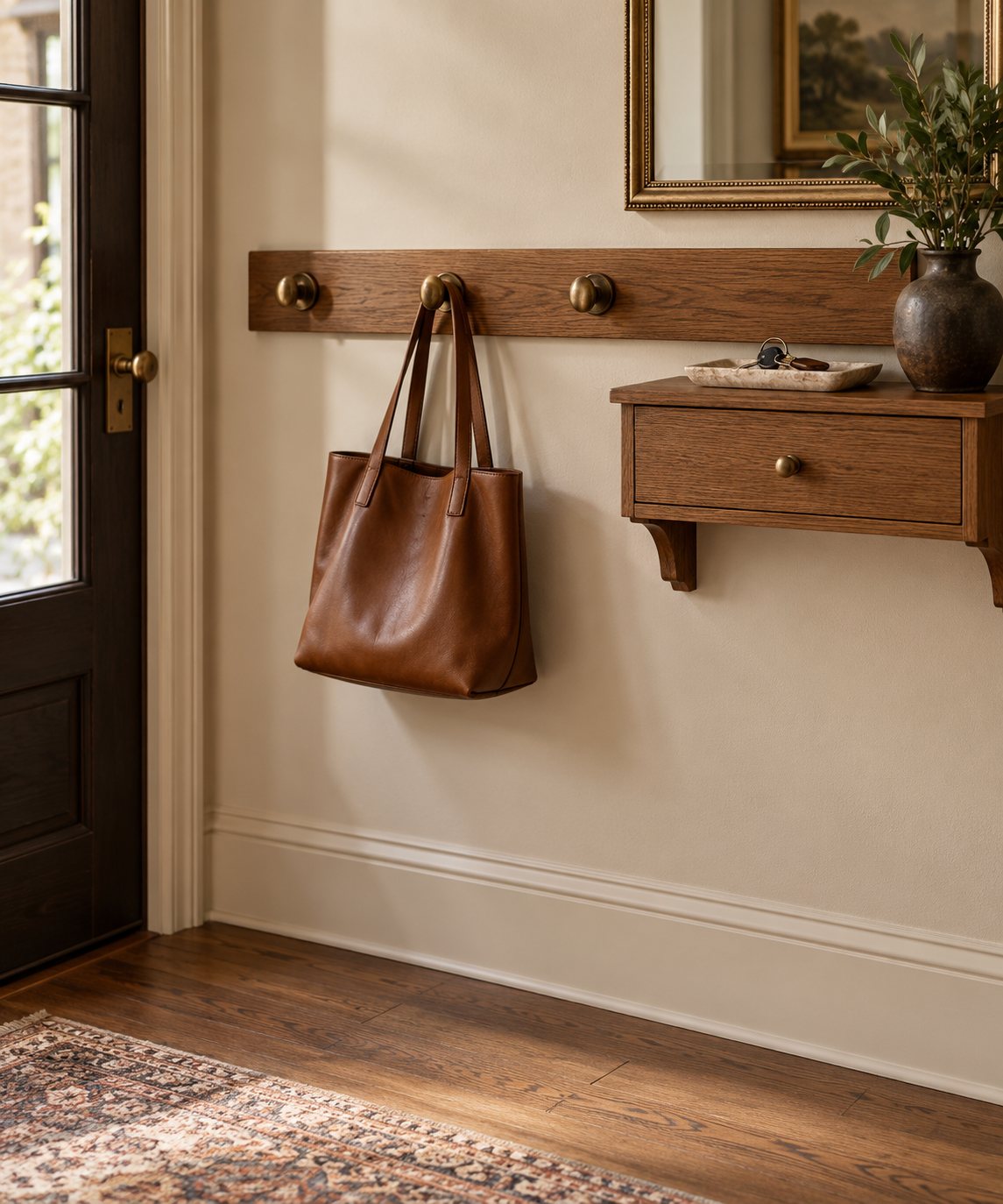
If you want a warmer entryway finish, choose a rail in wood or aged metal and pair it with a small framed print or mirror. Our guide to entryway mirror ideas shows ways to add reflection and character without relying on a large console.
2. Give Shoes One Contained Home
THE YHR EDIT
Slim Shoe Storage
Keep everyday shoes tucked away in a narrow cabinet. These streamlined options offer useful storage without making the entry feel crowded.

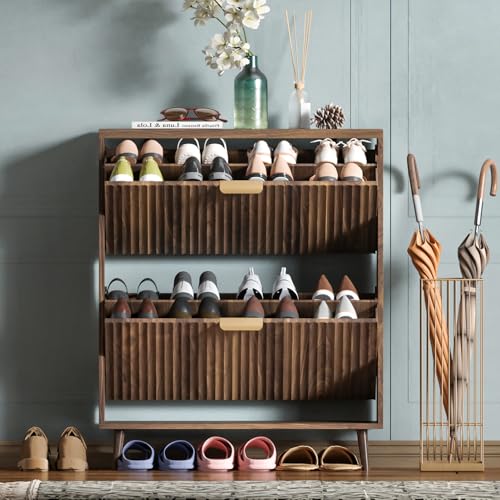
Shoes tend to overwhelm a small foyer because they spread across the floor in separate pairs and shapes. Choose one daily-shoe zone and make that the limit of what lives near the front door. The household’s full shoe collection does not need to be stored here; overflow, special-occasion shoes, and off-season pairs can stay in a bedroom closet or another storage area.
An open rack is easy to use and lets damp shoes air out, but every pair stays visible. A basket keeps a small number of casual shoes together, though shoes can be harder to find and moisture needs to dry first. A bench with shoe storage combines a seat and a shoe zone, but its depth can consume valuable path space. A shallow closed shoe cabinet is often one of the strongest options for a narrow entry because it hides visual clutter without needing the depth of a standard dresser. Check the cabinet’s true depth and the space its drawers or flip doors need when open.
The right choice depends on how many pairs your household actually wears each day, how wide and deep the available wall is, whether shoes arrive wet or muddy, and whether the storage is easy for everyone to use. Let muddy shoes dry before closing them away, and do not pack damp footwear into a sealed cabinet.
Best for a narrow wall: the BORNOON three-drawer shoe cabinet in white has a listed footprint of 31.5 inches wide by 9.45 inches deep by 47.24 inches high. Its shallow depth can suit a tight passage, but measure your own shoes and the open-door clearance before ordering. The clean white finish is a simple choice for a light entry; it will be less visually quiet against darker woodwork than a wood-tone cabinet.
For a closer look at rack, cabinet, and bench trade-offs, see our focused guide to entryway shoe storage ideas for small spaces.
3. Add a Landing Zone Without Adding a Full Console
THE YHR EDIT
Small-Space Landing Zones
A petite shelf gives keys and mail a proper home. Look for simple shapes that keep the essentials organized without visual clutter.


Keys, a wallet, sunglasses, and the dog leash do not require a full-size console. A wall-mounted shelf, a compact organizer with a ledge, or the top of a shallow shoe cabinet can provide one dependable landing place. Browse compact wall-mounted entryway shelves on Amazon if you want to compare options. Keep it small enough that the surface cannot turn into a second household counter.
Choose a home for the few things you reach for every day. Use a small tray for keys and sunglasses, and move mail to the place where you sort it rather than letting it collect in the entry. If a wall organizer has hooks, use them for keys or a leash; coats and heavy bags belong on hooks designed and installed to carry their weight.
Best when you have almost no floor space: the Rebee Vision wall-mounted key holder has a 14-inch-wide shelf and five hooks according to its current listing. It can give keys, a leash, and a small amount of mail one fixed home without adding floor furniture. Keep the shelf for items that are genuinely used at the door rather than treating it as a general display ledge.
4. Use Closed Storage for the Ugliest Clutter
THE YHR EDIT
Concealed Storage
Closed cabinets make the busiest entry feel calmer. These compact pieces hide the practical things while keeping the overall look polished.
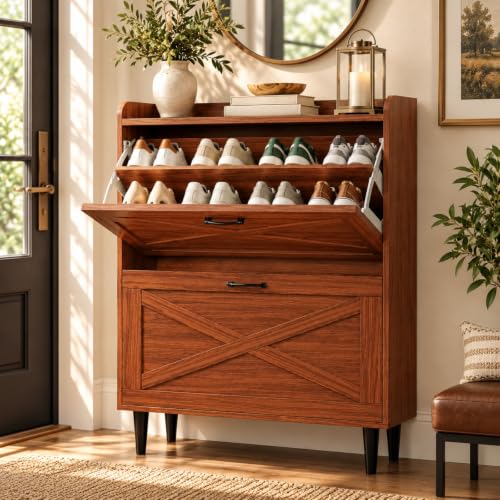
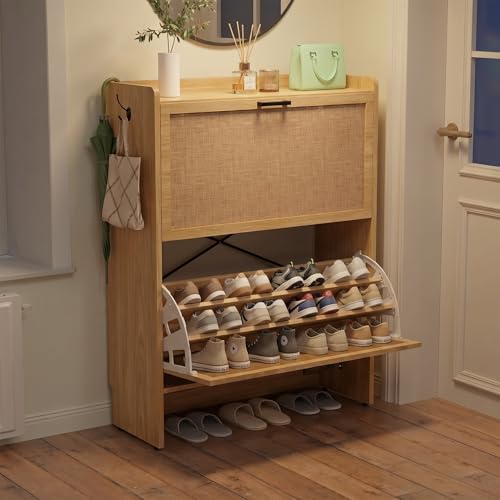
Not every useful thing needs to be hidden. One everyday coat, a bag that is leaving with you, an umbrella, or a single attractive basket can make a foyer feel lived in. The visual noise usually comes from too many categories competing at once: shoes, gloves, sports gear, dog supplies, mail, and packages all visible together.
Use doors or a drawer for shoes, hats and gloves, sunscreen, small sports items, and miscellaneous family gear that otherwise scatters. Leave a few attractive items visible, then repeat a material or color already in the room—warm wood, woven natural fiber, cream, or aged brass. This creates a collected look rather than a utility-room effect.
A woven basket can corral gloves, scarves, or dog supplies, but one purposeful basket is usually calmer than several small ones. Choose a size that fits the category it holds and a material that relates to the room. Avoid using a basket as a catch-all for things that need to be sorted elsewhere.
5. Only Add a Bench If It Earns the Space
THE YHR EDIT
Benches That Work Hard
A bench should earn its footprint. These options combine a convenient place to sit with useful storage or an airy, understated profile.
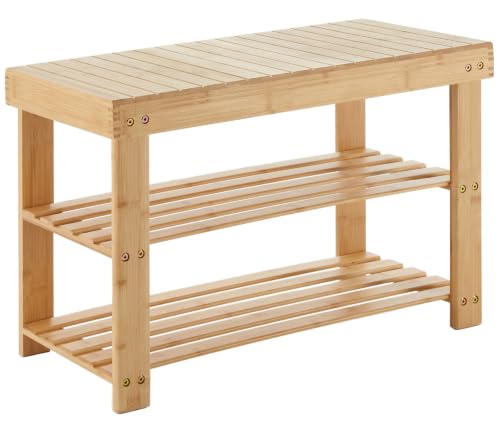
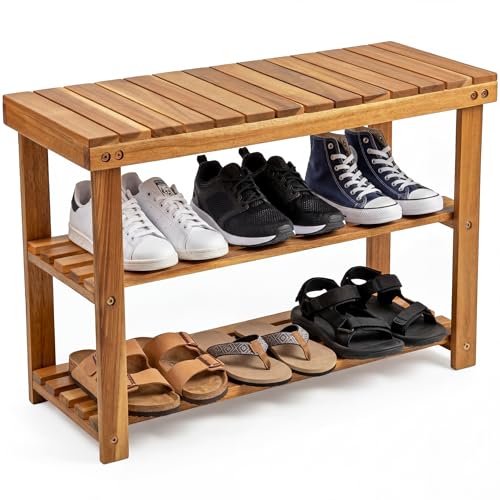
A bench can be useful when someone needs a place to sit, when it stores shoes, or when it gives a family a defined place to put on boots. It can also be a beautiful piece of furniture. But in a very narrow entry, a bench that only offers a seat may steal the walking room without solving the clutter problem.
Measure the bench depth and consider the path from the door into the rest of the home. Account for the door swing, a person sitting down, and the way baskets or drawers extend. If that feels tight, skip the bench. A low stool, a compact seat tucked under a shelf, or simply no seating can work better. Function comes before the furniture a foyer is expected to have.
Best for an affordable, slim shoe bench: the DUMOS three-tier bamboo bench offers a compact spot to sit while keeping daily shoes on the open shelves below. The natural wood finish works well with a warm, collected entryway. Check the current dimensions and measure your walkway before buying; open shelves are better for airflow than concealing clutter.
Our entryway bench ideas guide has more styles and seating approaches. A separate guide to benches with storage is scheduled for October 26; after it is live, this section should link to that more specific resource.
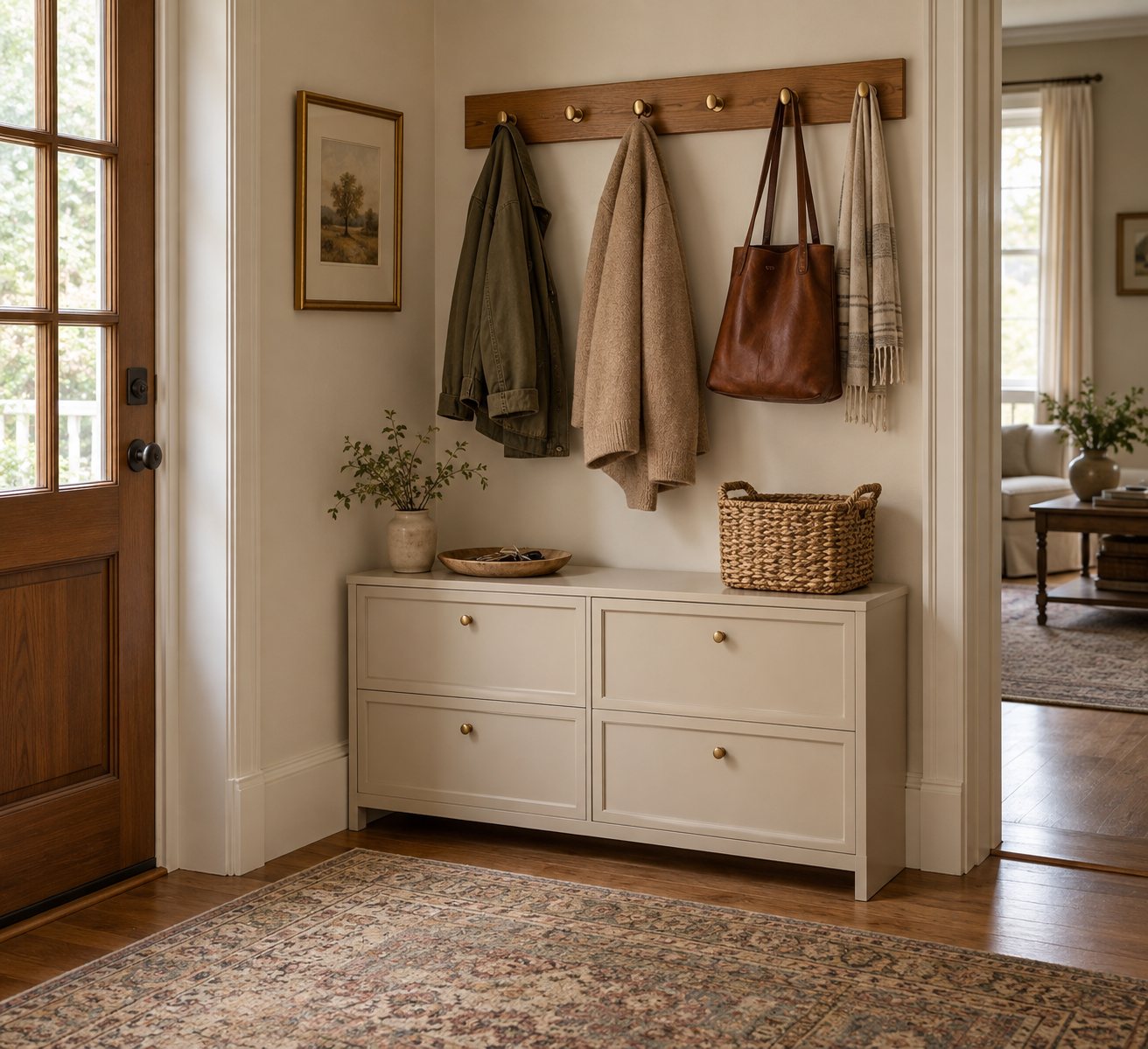
6. Create a Drop Zone Your Family Will Actually Use
THE YHR EDIT
Family-Friendly Drop Zones
Give everyday bags and jackets a designated spot with approachable wall-mounted storage that still feels thoughtfully designed.
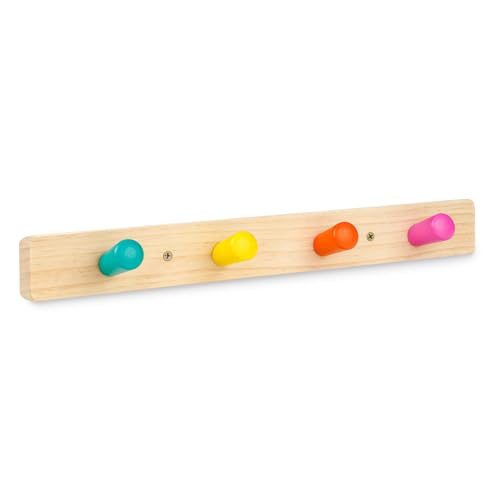

Family entryway storage works when the steps are simple. Put hooks at usable heights, give backpacks their own low hooks, define one shoe area, and place a small basket nearby for gloves or other small gear. Keep keys in the same spot every day.
Notice how your household already behaves and make the system fit that routine. If a child has to open a cabinet, pull out a bin, open the bin, put away a backpack, close the bin, and return everything, the system may be asking too much for a daily drop zone. A hook the child can reach is more likely to get used.
Keep the entry capacity realistic. Two children’s backpacks and one adult bag may be the usual daily load; make space for those first. Sports equipment and seasonal accessories can rotate to a closet, laundry room, or garage instead of crowding the front door.

7. Use Baskets Strategically
THE YHR EDIT
Woven Storage Baskets
Natural woven textures soften a hardworking space. Choose baskets that corral the clutter and look beautiful doing it.
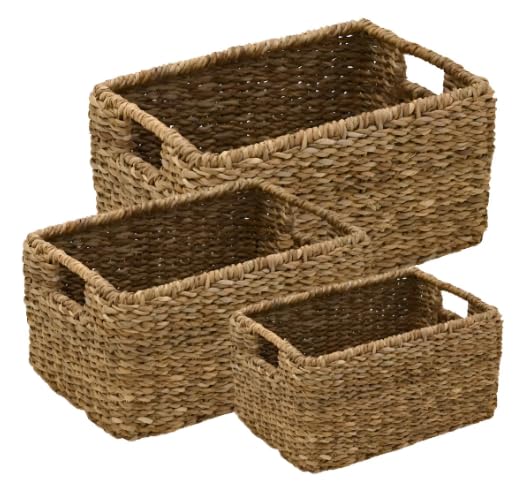
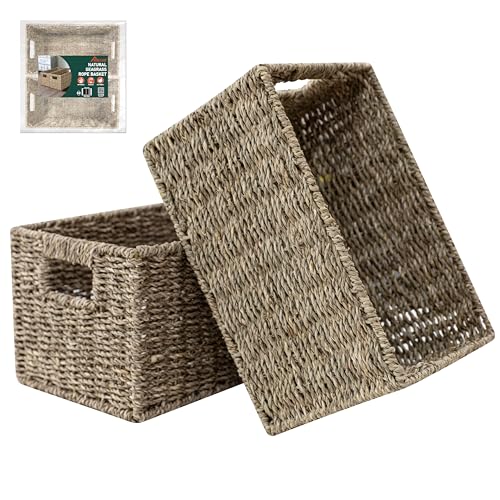
Baskets are helpful when they contain a clear category: hats and gloves, scarves, dog supplies, sports accessories, or children’s small items. They are less helpful when every loose object gets its own basket and the floor fills with containers.
One larger, purposeful basket often reads more calmly than five little ones. Browse natural woven storage baskets on Amazon for a warm, flexible place to keep hats, gloves, or dog supplies. Use a woven natural fiber or warm neutral textile that relates to the room, and leave it unlabeled unless a label would genuinely help your family return items. Keep wet shoes and muddy equipment out of natural-fiber baskets.
8. Define an Entryway When You Don’t Have One
THE YHR EDIT
Vintage-Inspired Runners
A runner helps create the feeling of an entry even when there isn’t a separate foyer. Muted patterns add warmth and definition.

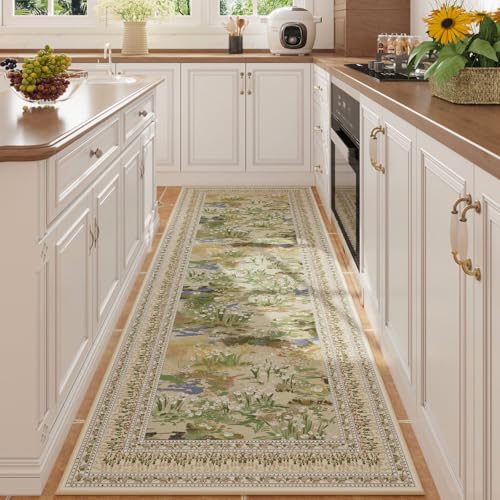
When the front door opens directly into a living or family room, the goal is not to build a fake foyer. It is to make the transition zone legible. A small rug or runner can mark the door area; a few wall hooks can handle the daily coat and bag; a shallow piece of furniture can add a landing surface if the path allows it.
A mirror or a piece of art helps the storage feel like part of the room, while a nearby lamp or ceiling fixture makes the entry feel intentional after dark. Keep the rug size and placement clear of the door swing, and use a non-slip pad if needed. For more guidance, explore entryway rug ideas and entryway lighting ideas.

9. Use the Back of a Door Carefully
THE YHR EDIT
Over-the-Door Organizers
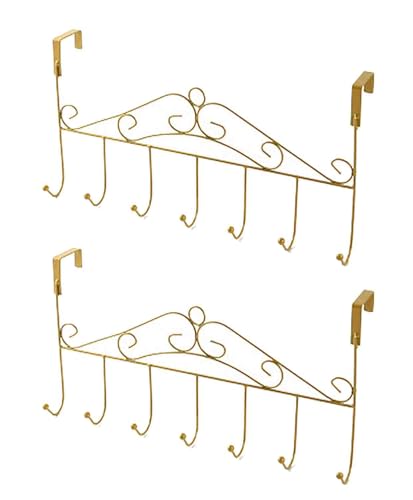
When wall space is scarce, the back of a door can quietly do more. These restrained hooks add storage without another piece of furniture.

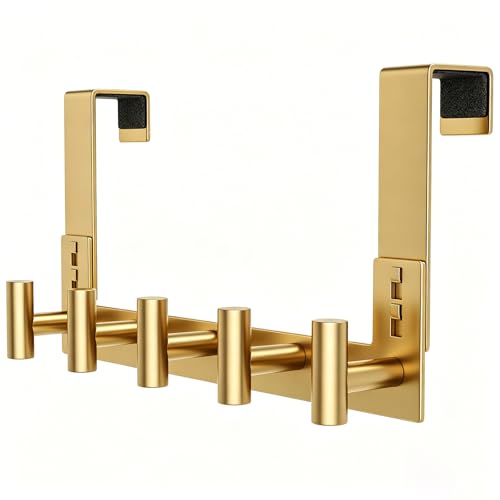
The back of a door can hold a few slim hooks or seasonal accessories if the door still opens fully and the hardware does not hit the wall or trim. Before installing anything, test the complete swing and check that a hanging bag or coat will not catch on the frame.
Door-mounted organizers are a secondary option, not the main storage plan. Bulky systems can bang against the wall, damage trim, or make a door awkward to use. A few well-placed wall hooks are often simpler.
10. Store Seasonal Overflow Somewhere Else
THE YHR EDIT
Out-of-Sight Seasonal Storage
Keep the entry reserved for what you use every day. Low-profile storage lets off-season extras disappear neatly elsewhere.


A tiny entryway should not be expected to hold every family coat, shoe, backpack, piece of sports equipment, winter accessory, summer accessory, umbrella, dog supply, package, and piece of mail all year. Keep daily-use items near the door and rotate less-used items to a closet, bedroom, laundry room, garage, or other storage area.
When the season changes, swap the everyday coat and shoe selection. Store specialty boots and rarely used bags elsewhere. This is not about owning fewer things; it is about asking the entryway to do a job it can actually handle.
Small Entryway Storage Ideas by Layout
For a Very Narrow Entryway
Start with wall hooks, a shallow shoe cabinet, and a wall-mounted landing shelf. Add a runner only if it fits the route and does not interfere with the door. Avoid deep consoles and test cabinet doors while measuring; depth is often the detail that turns an apparently good fit into a blocked walkway.
For an Entryway With No Coat Closet
Use a hook rail for current coats and bags, contain the shoes worn most often, and add one basket or bin for small accessories. Store seasonal overflow somewhere else. The aim is a useful open-air coat zone, not an exposed collection of every jacket in the house.
When the Front Door Opens Into the Living Room
Use a small rug, wall hooks, art or a mirror, and perhaps one shallow furniture piece to establish the transition. Keep the entry furniture visually related to the living room so the zone feels integrated rather than improvised.
For a Family Entryway
Give adults and children reachable hooks, assign backpacks a simple home, and keep daily shoes in one defined zone. One small-item basket and a quick evening reset are usually enough. The easier the routine, the more likely everyone is to use it.
For an Entryway That Needs Seating
Use a storage bench if its depth leaves room for the door and a comfortable path. If not, try a small stool or compact seat; if even that competes with circulation, leave seating out. A clear route is more valuable than a bench that cannot be used comfortably.
For an Entryway With Almost No Floor Space
Use hooks, a wall shelf, a wall-mounted key organizer, and a mirror or artwork. Browse small entryway mirrors on Amazon. Consider an extremely shallow shoe cabinet only after measuring the actual passage. If shoes still obstruct circulation, move the shoe zone to a nearby closet or another room.
Measure These Things Before Buying Entryway Storage
Measure the wall width and available depth, then check the full door swing. Note the trim and baseboards, outlets, switches, and any nearby window or radiator. Walk the usual route with the door open and closed to see where furniture would project. Finally, measure the actual items—especially bulky shoes, boots, backpacks, and bags—you expect the storage to hold.
Depth is the measurement people most often forget in a narrow entry. A piece can fit the wall and still protrude too far into the path. For cabinets, check the closed depth and the open-door envelope. For benches, include room for someone to sit and stand. For hooks, think about how far a loaded coat or backpack hangs into the passage.
There is no single clearance number that works in every home. Keep the route comfortable for the people who live there, respect accessibility needs, and do not let a product photo substitute for measuring your own layout.
What Should You Store in a Small Entryway?
Store the things you use while entering and leaving most often: daily shoes, the current coat, a bag or backpack, keys, sunglasses, a dog leash, and a few small seasonal accessories. A small landing place can hold what you carry every day.
Do not try to keep every coat, every shoe, a large archive of mail, and rarely used equipment at the front door. Give those items another home and let the entryway serve the daily routine.
How Do You Make a Small Entryway Look Less Cluttered?
Reduce the number of visible categories. Conceal shoes, limit the coats and bags on display to the ones in current rotation, corral small essentials in one tray or shelf, and leave part of the landing surface empty. Fewer storage pieces and a repeated palette of warm wood, woven texture, and quiet neutrals help the area feel connected to the rest of your home.
A small entryway does not need to be empty to feel composed. It needs a clear path, a few visible daily items, and a place for everything else to leave the entry when it is no longer in use.
What Furniture Works Best in a Narrow Entryway?
Shallow furniture that performs more than one job usually works best: a slim shoe cabinet, a wall shelf, a compact cabinet, or a storage bench where depth allows. A narrow console can work when you need a landing surface and the walkway remains clear.
Standard-depth dressers and cabinets often reach too far into a passage, even when they fit the wall width. Compare the furniture footprint with the open door, the shoes stored below it, and the path everyone uses before choosing a piece.
How Can I Add Entryway Storage Without Making It Look Like a Mudroom?
Use fewer components, choose furniture-like closed storage, and select attractive hooks in warm wood, aged brass, or a considered dark finish. A vintage runner, a simple mirror or framed art, restrained baskets, and good lighting can make the practical pieces feel like part of the home.
When in doubt, edit the system rather than adding another organizer. The most successful small entryway is not the one that holds the most. It is the one that gives daily items an easy home while leaving the walkway and the room itself calm.