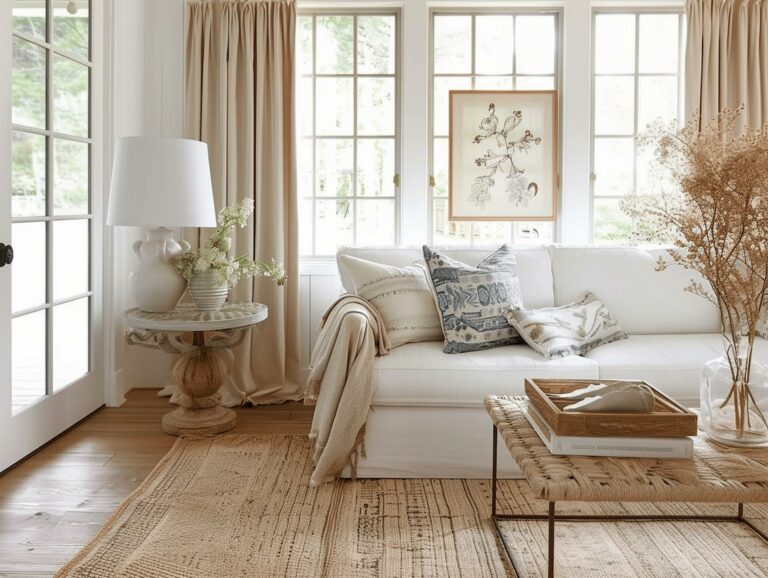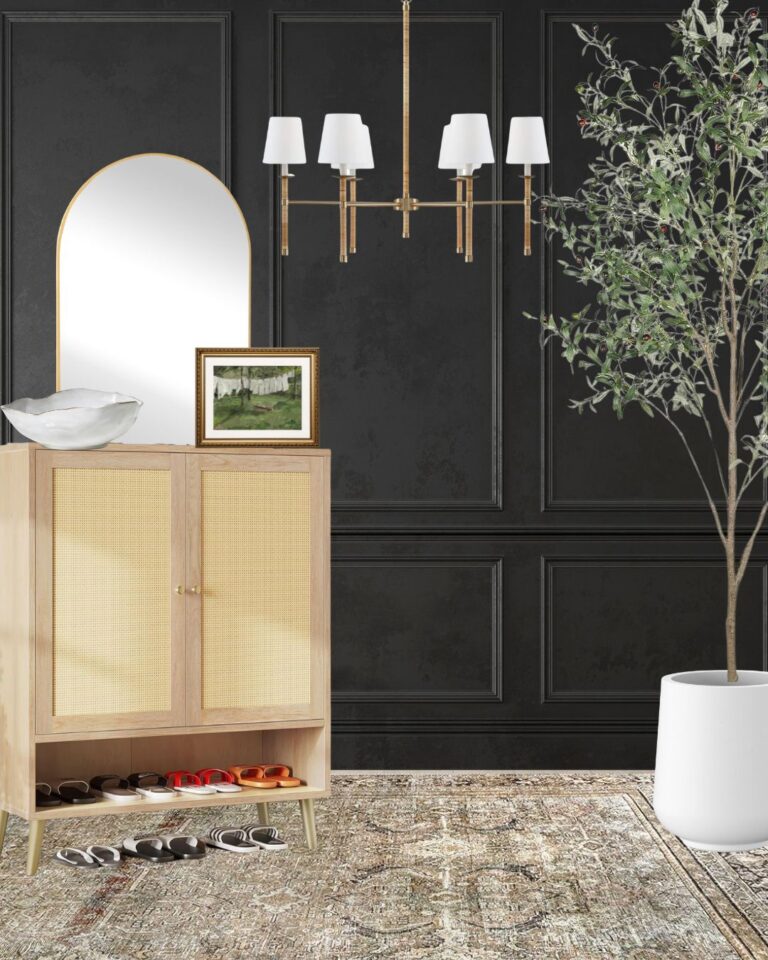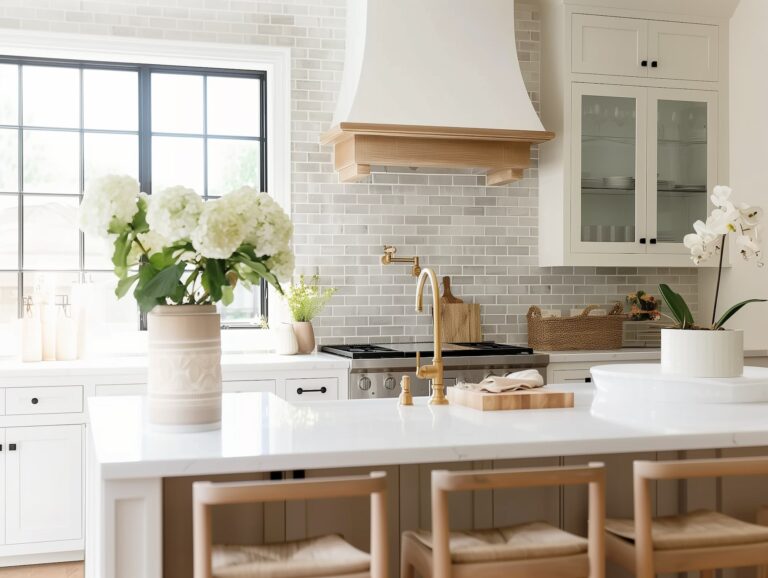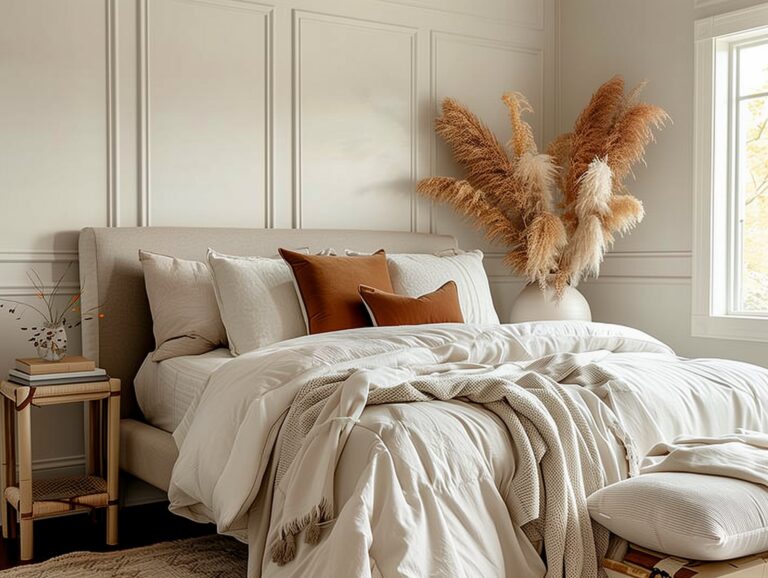

Wondering what colors go with a grey sofa? Find seven room-ready palettes, learn how to read your sofa’s undertone, and choose pillows, rugs, and accents that make the whole living room feel considered.
Shop The Post

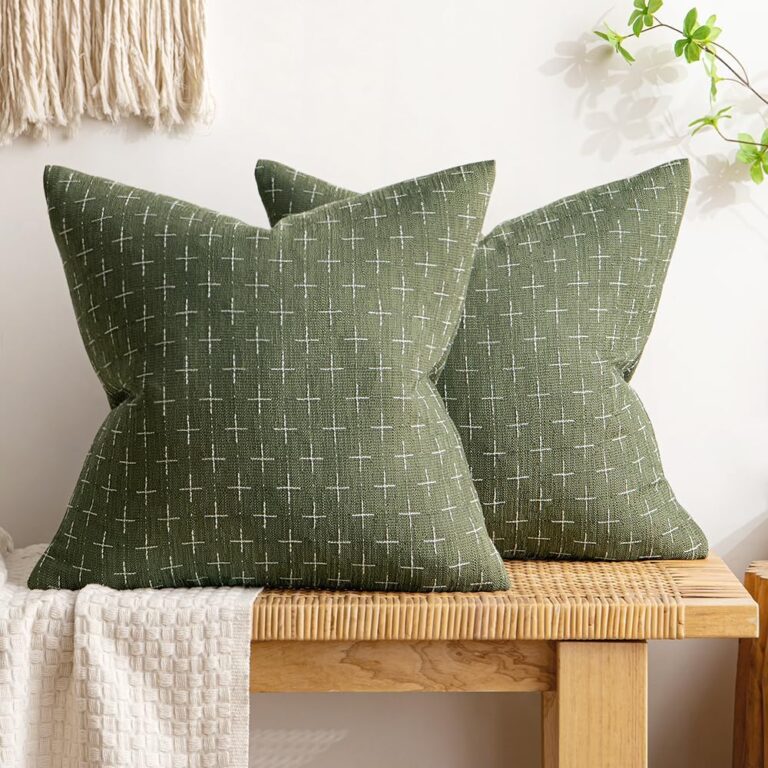
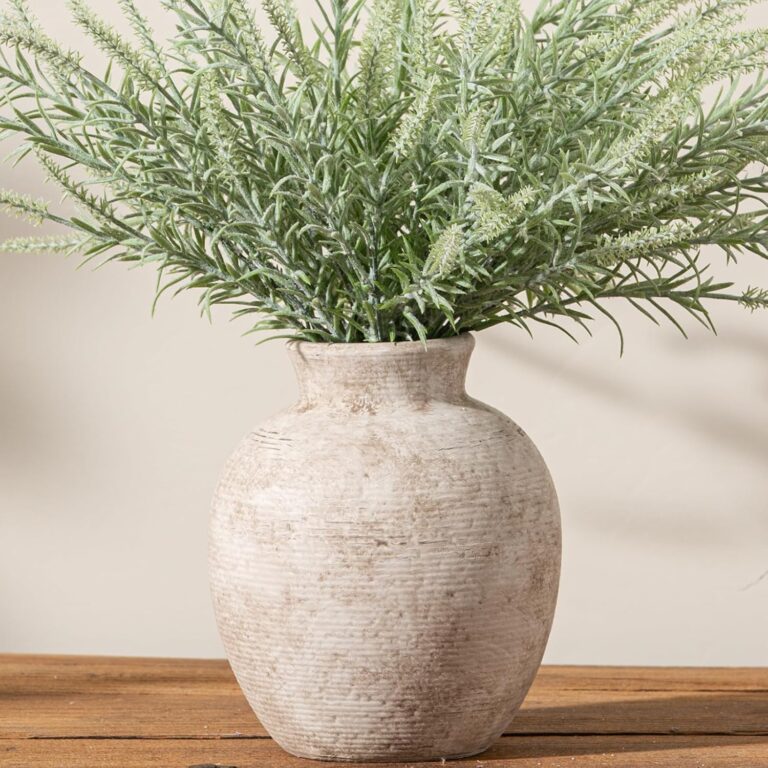
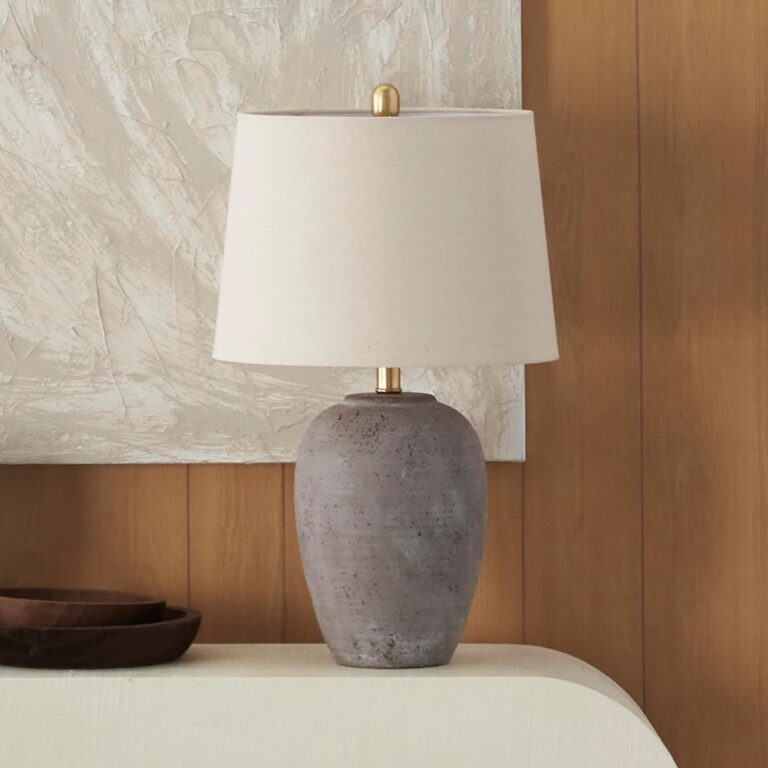


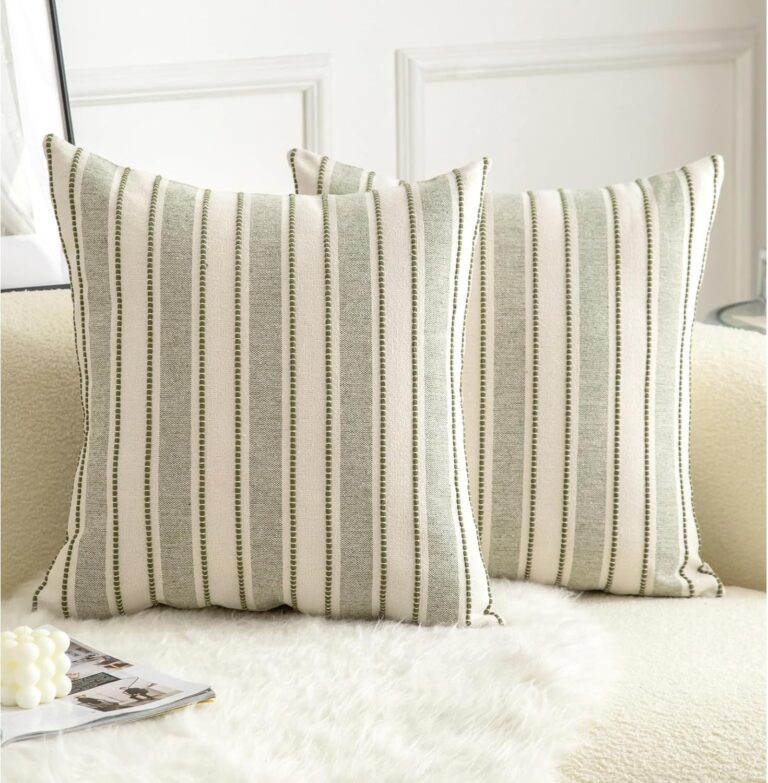

The short answer: a grey sofa works with warm whites, cream, taupe, camel, olive, sage, muted blue, rust, natural wood, and touches of black. The best combination depends on whether your grey reads warm, cool, or charcoal—and on the colors already in your room.
What colors go with a grey sofa? Start with its undertone
Grey is a flexible neutral, but it is not undertone-free. Before choosing pillows or a rug, look at the sofa in daylight beside a piece of plain white fabric or paper. If it looks blue or slate, it leans cool; if it reads beige, brown, or slightly green, it is warmer. Check again beside the room’s flooring and wall color, since those fixed finishes influence the overall palette.
- Warm grey or greige: pair it with ivory, camel, taupe, olive, warm wood, or soft terracotta.
- Cool grey: try soft white, dusty blue, slate, sage, and a little black; add wood or brass if the room feels chilly.
- Charcoal: use lighter fabrics, warm neutrals, and natural materials to create contrast and keep the seating area from feeling heavy.
You can mix warm and cool colors. The room will feel cohesive when each temperature appears more than once—for example, dusty blue pillows balanced by warm wood and an ivory rug. For a deeper explanation of undertones, see Sherwin-Williams’ color undertone guide.
Seven colors and palettes that work with a grey sofa
Choose one light neutral, one supporting color, and one deeper accent. You do not need to use every color below; these seven palettes are starting points you can adapt to your sofa and the finishes you already own.
1. Warm earth tones: rust, olive, cream, and brown
Warm earth tones soften cool grey and make a living room feel relaxed rather than stark. Cream gives the palette breathing room, while olive or rust adds color with enough depth to stand up to a grey sofa.
Best for a room that feels cool or unfinished. Use rust in one or two accents, olive in a pillow or plant, and warm brown through wood or a woven texture.
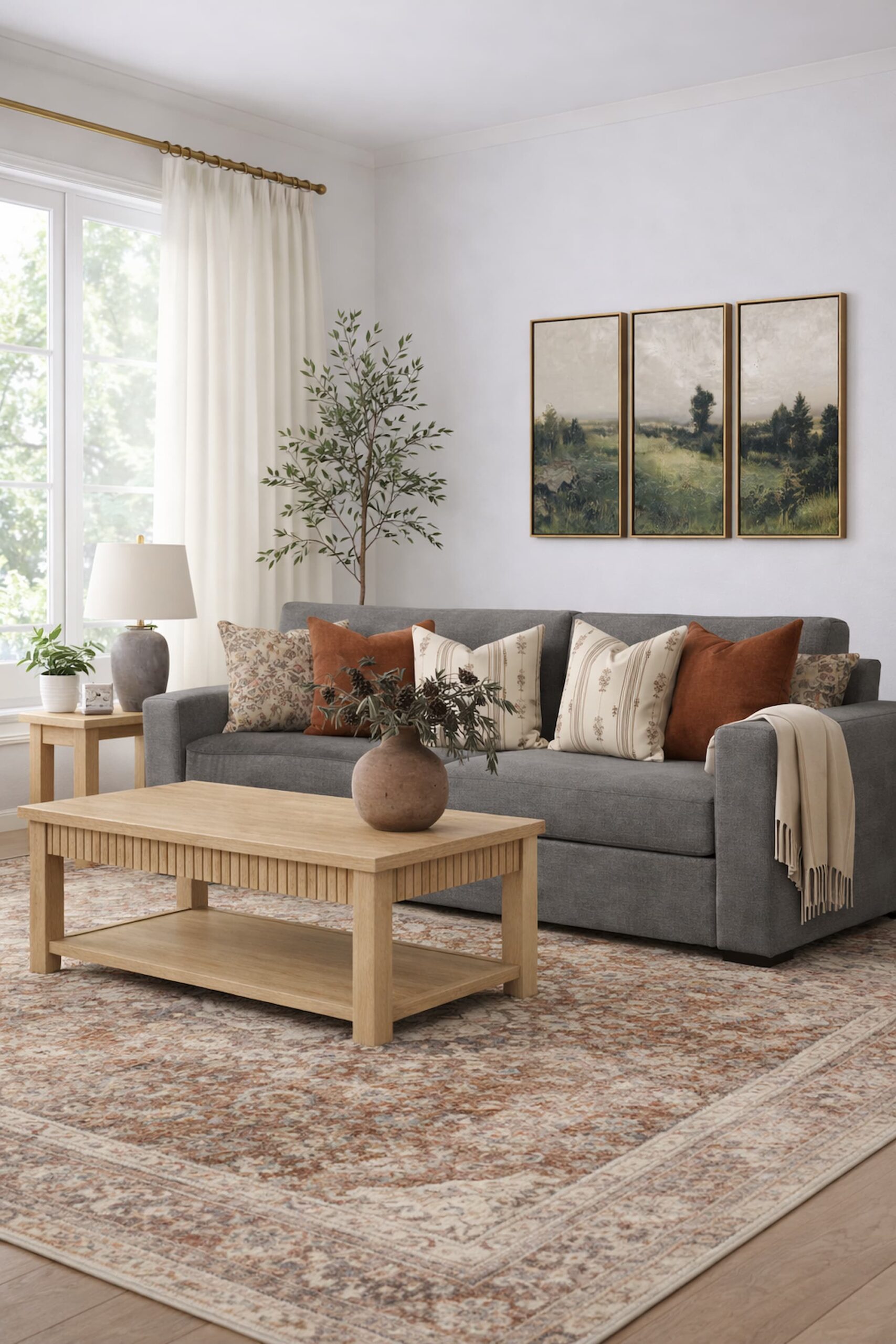
- Cream or oatmeal pillows to soften the sofa
- A muted rust or olive accent, repeated in art or a throw
- Warm wood or a faded patterned rug to ground the seating area


2. Soft whites and ivory for a light, layered look
Soft white, ivory, and linen brighten grey upholstery without the sharp contrast of optic white. A range of cream tones and tactile fabrics keeps this simple palette from looking flat.
Best for a dark grey sofa or a room that needs more light. If the sofa is greige, choose warmer ivory; if it is blue-grey, a softer neutral white may feel fresher.
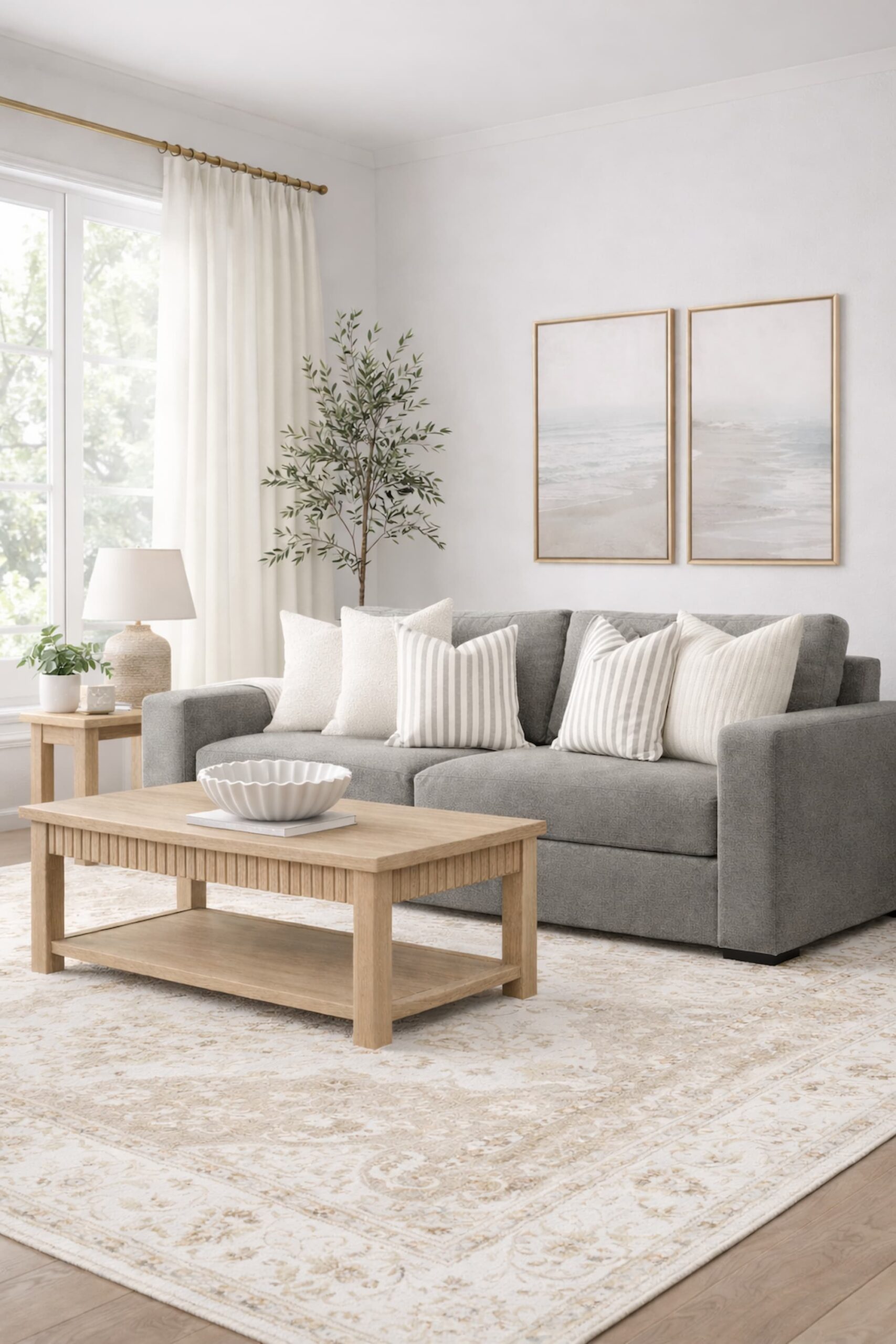
- Ivory or linen pillows in different textures
- Light curtains that relate to the wall color
- A cream rug with a quiet pattern or subtle grey detail


3. Muted blue, slate, and soft navy
Blue and grey are a classic pairing. Dusty blue and slate feel calm and layered, while a small amount of soft navy gives the palette definition without making the room feel formal.
Best when the sofa already has a cool undertone or the room has blue in its artwork, view, or adjoining spaces. Add a warm material to keep the scheme from feeling cold.
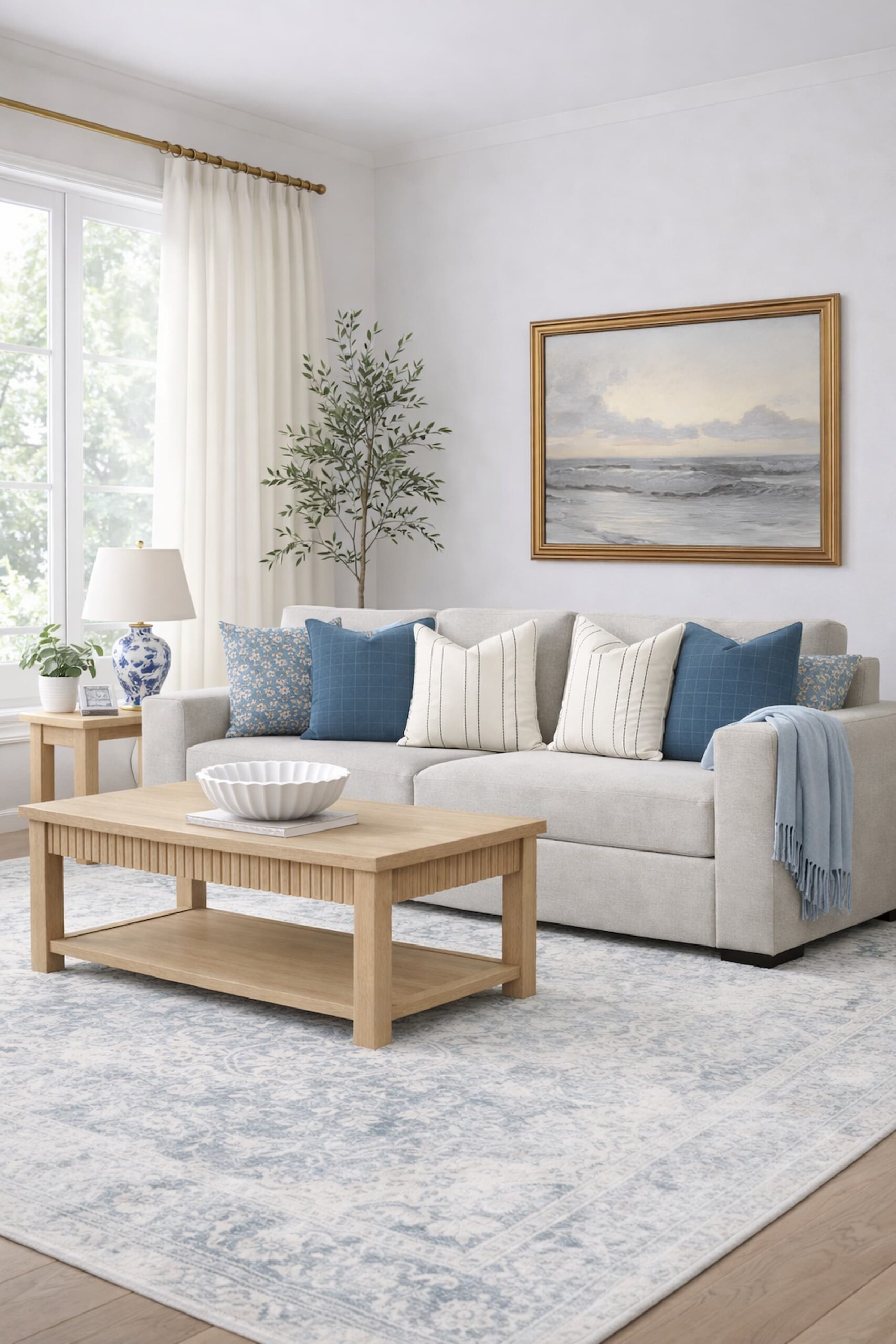
- One dusty blue pillow mixed with cream or grey
- A rug with a faded blue pattern instead of a solid blue field
- Oak, walnut, or brass to warm the palette


4. Sage, olive, and eucalyptus green
Soft greens bring life to a grey sofa without overpowering it. Sage feels light and quiet; olive is earthier and richer. Taupe, cream, or natural wood helps either shade feel at home.
Best for a calm, natural living room. Repeat the green in two or three places—such as a pillow, a plant, and a detail in the rug—rather than making every accent green.
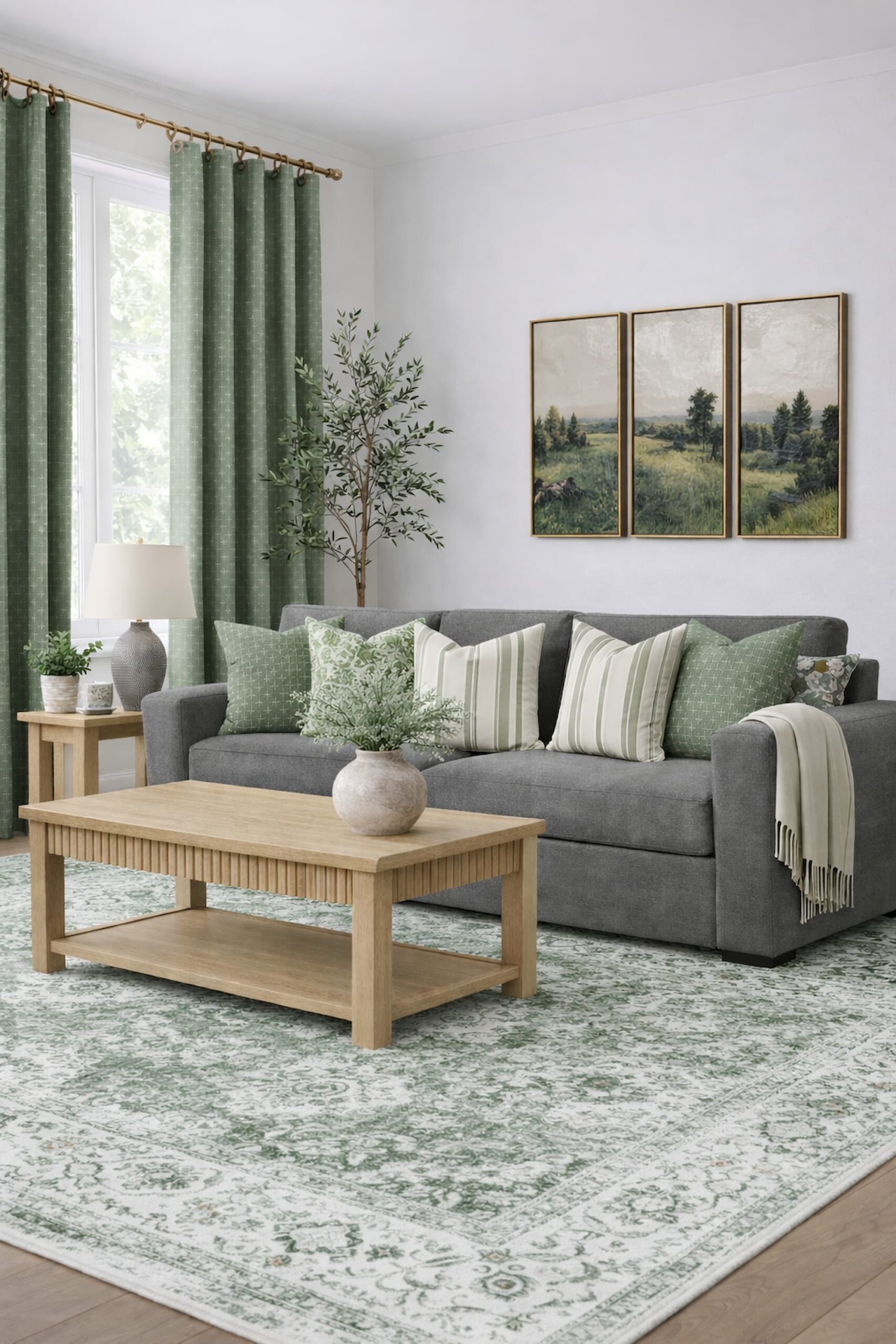
- Sage or olive pillows against a neutral base
- A leafy plant or green detail in artwork
- A warm wood table or basket for texture


5. Camel, cognac, and warm wood
Camel and cognac add warmth and character while letting the sofa stay neutral. They are especially effective in leather, woven fibers, and wood, where material and color work together.
Best when you want a warmer room without bringing in a bold accent color. A little goes a long way: one leather detail or a pair of camel pillows can shift the whole seating area.
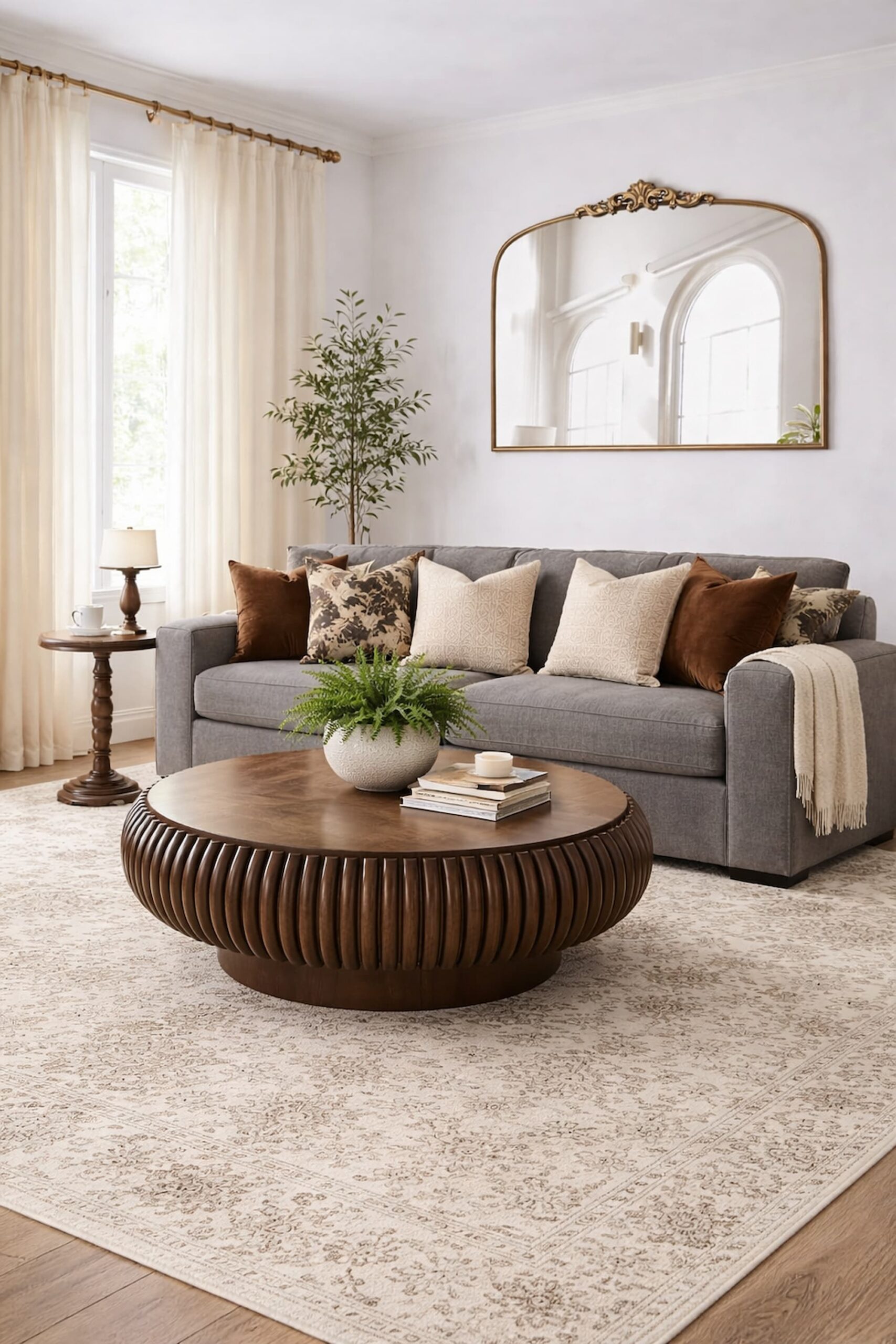
- Camel pillows or a cognac leather accent
- Medium or warm wood furniture
- Cream or patterned textiles to bridge brown and grey


6. Coastal blue and green with natural textures
For a coastal feel, layer softened blue and green with warm white, natural fibers, and wood. Several muted shades look more collected than relying on a single bright aqua or a strict navy-and-white scheme.
Best for a bright room or a home that already uses blue and green. Pick one as the lead color and bring the other in through smaller accents.
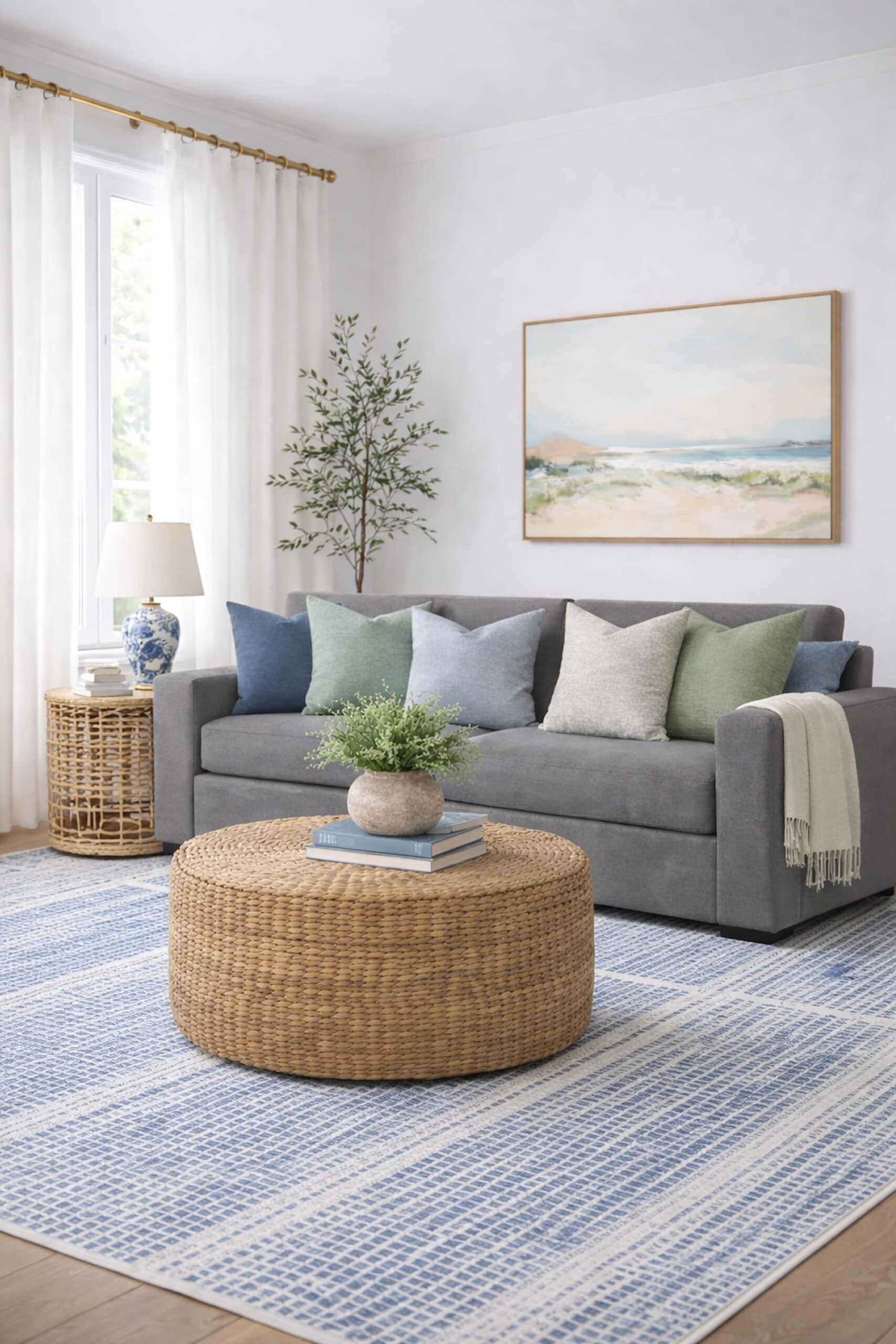
- Dusty blue with sage or sea-glass green
- Warm white linen and woven texture
- A relaxed stripe or faded pattern to connect the colors


7. Black, warm white, and a touch of brass
Black gives a grey sofa crisp definition, especially in frames, lamp bases, or a small table. Warm white and pale wood keep the contrast from becoming too stark; brass adds a gentle note of warmth.
Best for a tailored or modern look. Use black in a few repeated outlines rather than large blocks, particularly if the sofa is already charcoal.

- Black frames or a small accent table
- Warm white pillows or a light rug for contrast
- Brass or warm wood to soften the edges


How to build a finished living room palette
Once you choose a direction, repeat the colors across more than one surface. A pillow, artwork, and rug detail can share a color without matching exactly. Texture—linen, wool, woven fibers, wood grain, ceramic, or leather—adds depth when the palette is mostly neutral.
Choose the rug before buying every accent
The rug is often the largest color partner to the sofa. A cream or warm neutral rug brightens the seating area; a muted pattern can connect grey upholstery with wood floors and accent colors. Look for at least one shade shared with the sofa and one that appears elsewhere in the room. For more guidance, see our living room rug ideas and neutral rugs for living rooms.
Mix pillow color, pattern, and texture
Start with two or three pillow colors from your palette, then vary the scale of the pattern and the feel of the fabric. One solid, one small pattern, and one more tactile cover is an easy mix. Repeat a shade elsewhere so the pillows feel connected to the room.
Keep curtains and wood finishes in the room’s temperature
Ivory, flax, and soft white curtains work with many grey sofas, but check them beside the wall color and trim before ordering. Oak, walnut, and medium brown wood all pair well with grey; choose the finish that relates best to the floor and other furniture.
Frequently asked questions about colors for a grey sofa
What colors go with a grey sofa?
Warm white, cream, taupe, camel, olive, sage, muted blue, rust, and natural wood all pair well with grey. Choose shades that complement the sofa’s undertone and repeat them around the room.
What color rug goes with a grey sofa?
Cream and warm neutrals brighten the seating area; muted blue, green, rust, or a soft pattern adds more color. Choose a rug that connects the sofa to at least one other finish or accent in the room.
Do warm colors work with a cool grey sofa?
Yes. Camel, rust, and warm wood can balance a cool grey. Keep the warm accents muted and repeat a soft neutral, such as ivory, so the contrast feels connected.
How many colors should I use with a grey sofa?
Start with three: a light neutral, a supporting color, and a deeper accent. Repeat each color in more than one place, then add variety through texture and pattern.
Bring the palette together
A grey sofa is a useful foundation, not a decorating limit. Start with its undertone, choose a small palette that suits the room, and add color through flexible pieces you can change over time. If you are still finishing the room, explore more living room gallery wall ideas to connect your sofa palette with the walls.