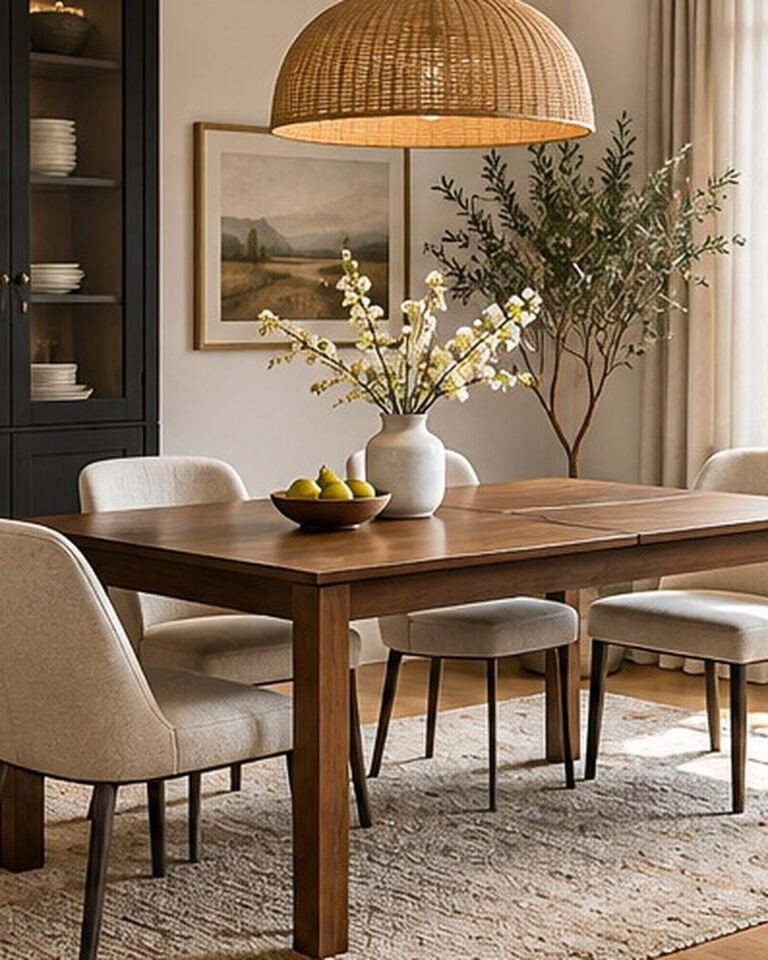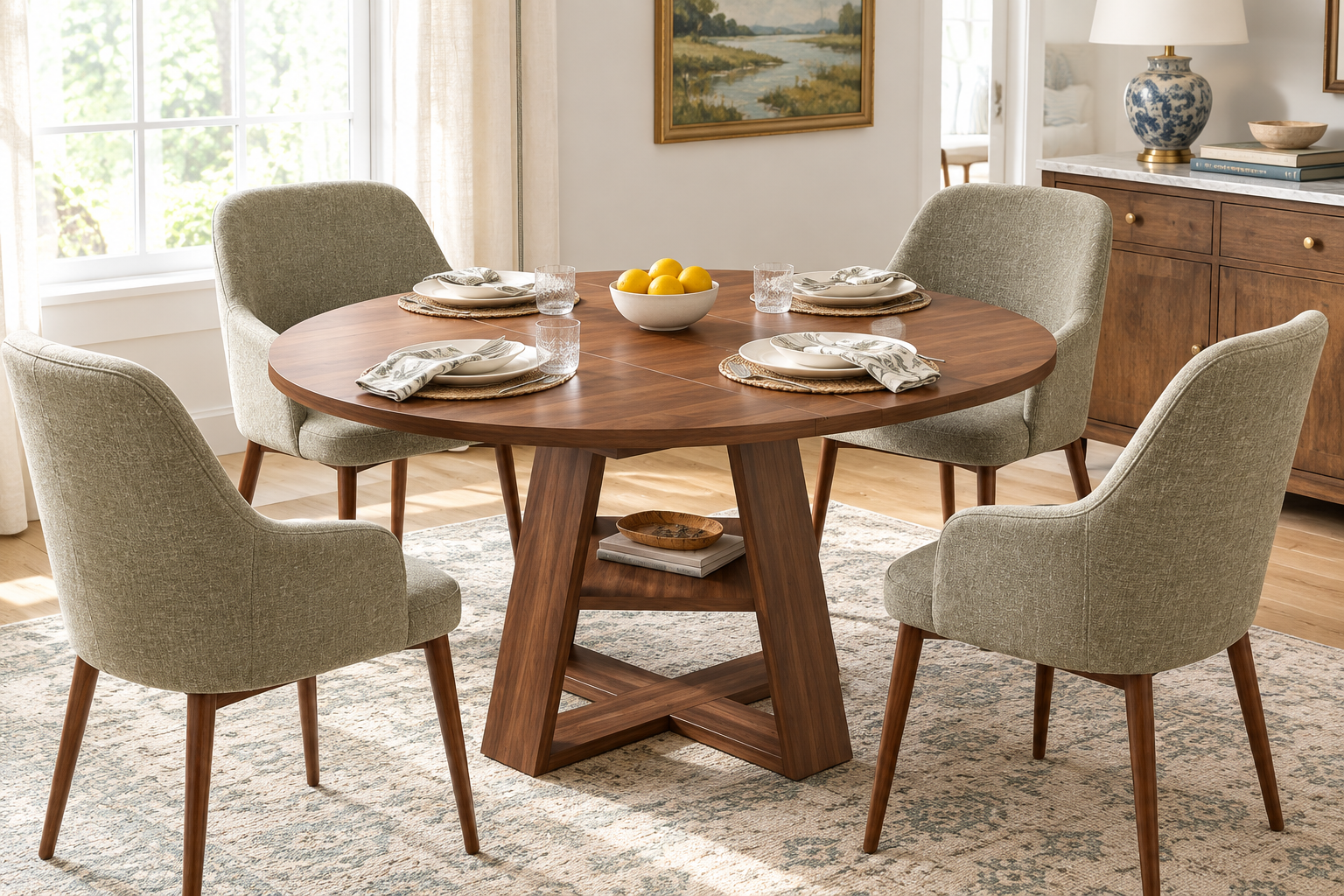
A dining table can look lovely between meals and still be surprisingly awkward to eat at. The bowl is in the way of the serving dish, the runner needs special care, and someone has to relocate half the arrangement before dinner. The simplest approach to everyday dining table decor is to start with one low, movable centerpiece, add washable textiles where they're useful, and keep the space your household needs for meals clear.
You probably own some of what you need already. A serving bowl, a set of cloth napkins, or a runner tucked in a drawer can give the table a little attention without turning it into a formal setting.
As an Amazon Associate, Your Home Revival earns from qualifying purchases.
Choose a low, easy-care centerpiece
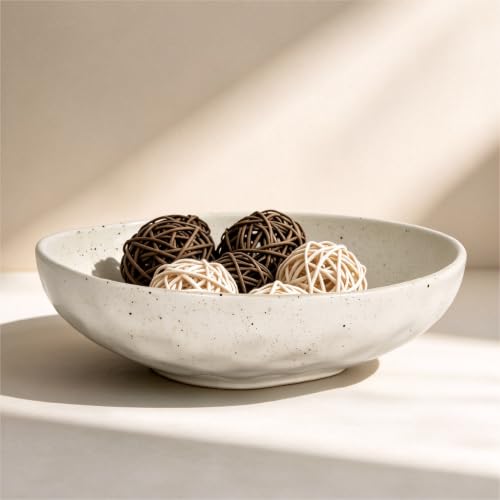
A shallow serving bowl you already own may be a better centerpiece than a tall arrangement: people can see one another across it, and its broad surface gives a ceramic glaze room to stand out.
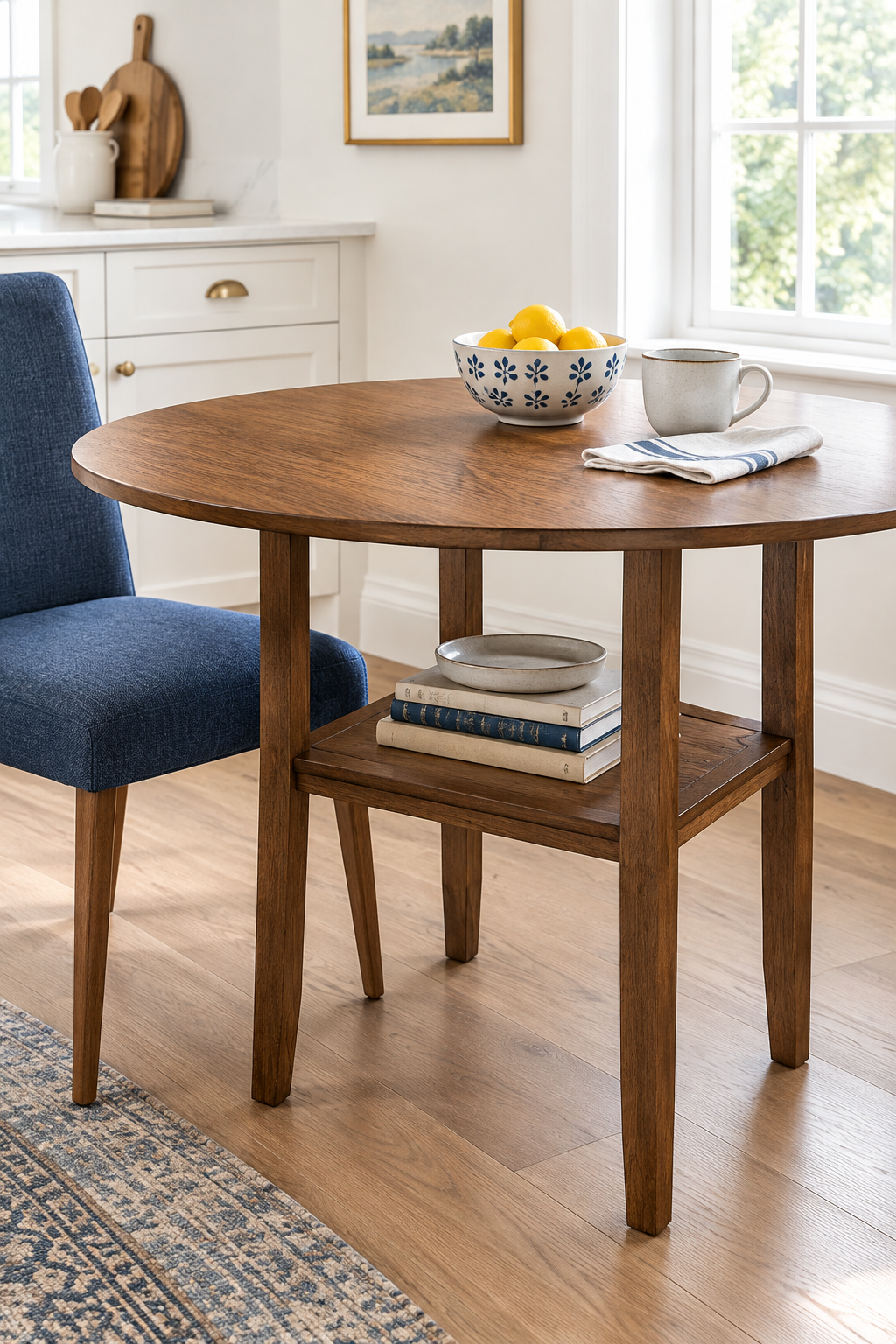
The bowl doesn't have to hold anything. An empty ceramic bowl can be enough, particularly if its glaze stands out against the tabletop. Cream looks soft against dark wood, while a deeper brown or blue gives a pale table a clearer point of interest. Let the material and color do the decorating instead of filling the bowl just because it's there.
If you want to keep fruit in it or use it for serving, confirm that the bowl is intended for food contact. A decorative finish isn't proof of food safety, and an older piece with an unknown glaze is better kept out of food service. Cleaning matters too: check the care guidance rather than assuming ceramic can go in the dishwasher.
On a narrow or round table, one bowl often looks complete on its own. Of the two bowls in our final collection, the 7.9-inch ruffled ivory dish makes a smaller decorative accent, while the roughly 10-inch speckled seicasaya bowl has a broader, irregular shape. Both let the ceramic itself be the focal point; choose the size that leaves room for your serving dishes. A longer table doesn't necessarily need more objects; a bowl in a contrasting color can stand out without filling the whole middle.
Choose a runner for everyday meals
A runner can soften a bare surface that feels a little stark, but it's not compulsory. If you love the wood grain or have a compact table, leaving the top uncovered can be the nicest choice.
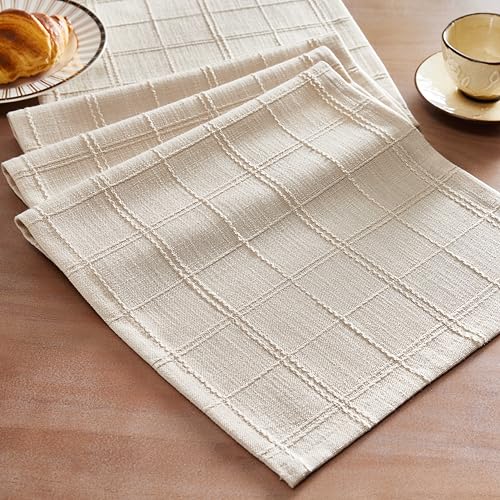
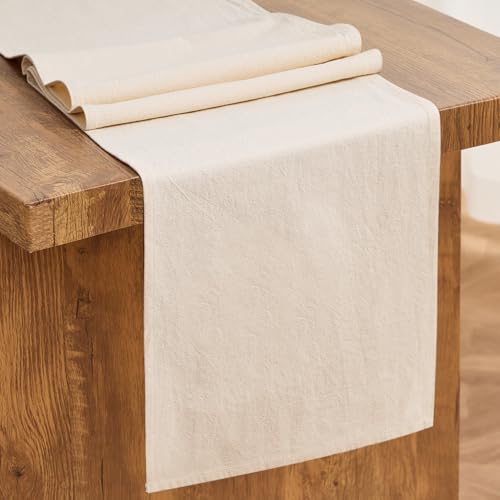
Cotton and linen are worth considering for an everyday runner because they bring texture without requiring elaborate styling. In our collection, the 13-by-72-inch ZeeMart runner is a linen-polyester blend with a raised grid, while the 12-by-72-inch Letjolt is plain cotton. The first adds more texture; the second leaves patterned dishes to do the talking. For care, ZeeMart allows machine washing and tumble drying. Letjolt calls for a cold wash with mild detergent, no bleach, and a low iron setting. Choose the routine that suits your week.
Think about color in relation to the room rather than choosing a neutral automatically. Natural linen tones can soften a dark tabletop; a muted blue stripe might pick up the color of kitchen cabinetry in an open-plan space. That small connection helps the dining area feel part of the home without matching every textile.
Lay out your largest everyday plates before choosing a runner, then measure the strip between them. That gives you a useful width to shop for; check the length too, so any overhang stays clear of chair seats and people's laps.
A little rumpling can suit a relaxed table, but a runner isn't a substitute for heat protection. Keep suitable trivets handy for hot serving dishes rather than relying on a fabric layer to protect the finish.
Read more: Kitchen Design Ideas That Feel High End
Use cloth dinner napkins and placemats
Cloth napkins are an easy place to introduce color or pattern, especially if you've left the tabletop bare. A small amount of fabric can change the feel of familiar dishes.
There's no need for a special fold. A rectangle beside the plate is easy to set down and looks relaxed. If your dishes are plain, try a small check or a narrow stripe. If the plates already have a pattern, a solid napkin that picks up one of their colors will feel more settled. You don't need a perfectly matched set for the connection to work.
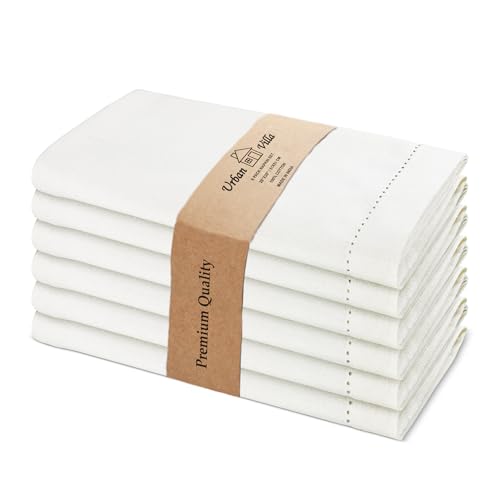
Choose napkins with care instructions you're willing to follow, whether they're cotton, linen, or a blend. The ivory Solino Home set combines cotton and linen and includes four 20-inch-square napkins; the ivory Urban Villa set offers six in cotton at the same size. Pick the fabric you like and count the places you set most often, allowing for laundry. If you'd rather not iron, consider whether you'll enjoy the fabric's appearance straight from laundering. Keeping a spare set means the table can still be set while the others are in the wash.
Placemats are a separate decision, not a requirement just because you're using napkins. They can define each person's spot and add a useful layer beneath dishes, but their care needs vary. A textured woven mat may catch crumbs, while a washable fabric mat brings another item into the laundry. Neither is automatically the easier option for every household.
On a small table, a runner plus placemats can leave very little surface showing. Try one or the other first.
SHOP THE EDIT
Soft Ivory, Familiar Dishes
Solino Home offers four cotton-linen napkins; Urban Villa offers six in cotton. Both ivory sets are machine washable. Choose the set size and fabric you prefer, with a spare or two for laundry day.

Try flameless candles for evening meals
For evening meals, flameless candles can bring a softer glow without an open flame. They're worth considering when real candles aren't practical, rather than as a finishing touch every table needs.
A pair of flameless tapers can work with candlesticks you already own. The ivory Homemory set in our collection includes six 9.6-inch candles with a 0.78-inch diameter and two remotes. Measure your holders' openings so the candles sit securely.
Tall holders can still interrupt conversation even when the candles are flameless. If a taper and holder sit directly between people's faces, move them out of that sightline or consider a lower candle format.
Keep spare batteries away from children and pets, close the candle compartments securely, and follow the maker's guidance on heat and moisture.
Look at the effect with your usual dining light on. If the room already feels warm and comfortable, you may not need candles at all. If it feels bright and flat in the evening, a small amount of softer light can be a worthwhile addition without adding much to the table.
Arrange for daily use and easy clearing
Now try the arrangement with an actual meal in mind. Put out the plates, glasses, and the serving dish you use most often. This tells you much more than looking at an empty table. Can everyone reach what they need without stretching over a bowl or shifting a candlestick?
Decide where the centerpiece will go when you need the full surface. A clear spot on a sideboard or nearby shelf makes moving it simple. Without a landing place, even a small arrangement tends to end up on a kitchen counter where it's in the way again. If you use a tray to gather smaller pieces, make sure it's comfortable to carry when loaded and won't scratch either surface.
For a table that doubles as a workspace, a nearby drawer or cupboard can hold napkins and candleholders until dinner.
Pull a chair out and sit down for this check, too. It's easier to spot a glass tucked out of reach or a centerpiece blocking someone's view from the seat than from beside the table.
After a few ordinary meals, edit whatever keeps causing trouble. If you're always moving one object, give it a permanent home elsewhere. If a textile demands more care than you want to give it, simplify the layers. Those small changes make the arrangement suit your household rather than asking your household to work around it.
Read more: Dining Room Area Rug Size Guide: 12 Washable Low-Pile Rugs for Every Table Size
A Few Last Thoughts
The nicest everyday table is the one you’re happy to sit down at on an ordinary Tuesday. If it needs very little attention before dinner, the decorating has done its job.
SHOP THE POST
Simple Layers, Open Space
Use one low ceramic shape as the anchor, then soften the setting with a washable textile that contrasts with the tabletop or echoes a color nearby. Leave enough bare surface for serving dishes, and skip any extra layer that makes the daily reset harder.