
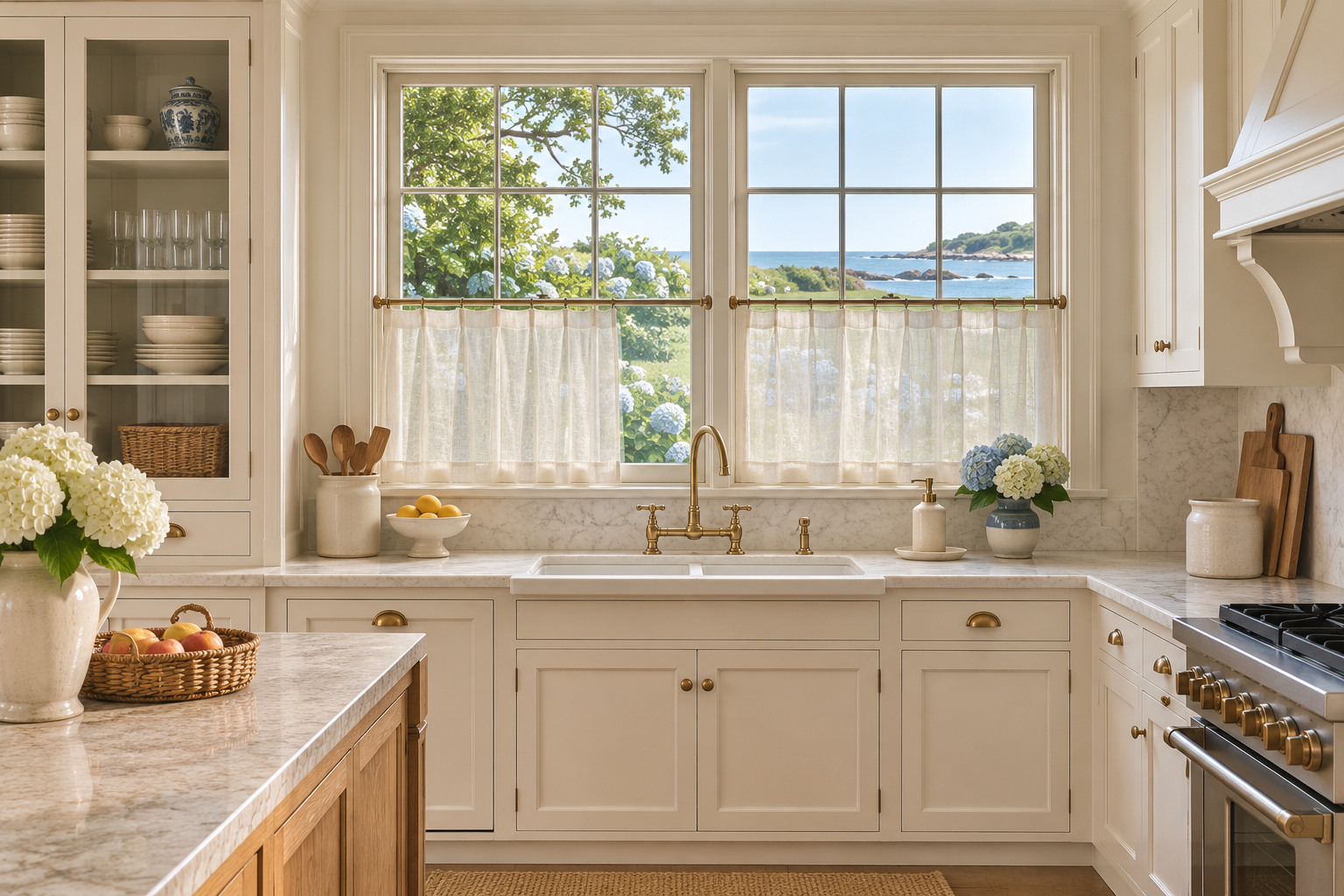
As an Amazon Associate, Your Home Revival earns from qualifying purchases. Room images are AI-created styling illustrations; check the linked listings for exact products.
Room images show decorating inspiration, not the exact curtains linked below.
A kitchen can have lovely cabinets and a beautiful backsplash and still feel a little bare around the sink. A café curtain gives the window something soft without covering the part that brings in the most light. Hang one across the lower part of the glass and you can still see the tree outside while keeping the sink a little less visible from the street.
The fabric makes more difference than you might expect. A white panel keeps the window quiet, a stripe gives plain cabinetry a bit of structure, and a faded floral makes the whole room feel more collected. Here’s how I’d use each one, and what I’d measure before ordering.
1. Soft white with brass for a bright, simple kitchen
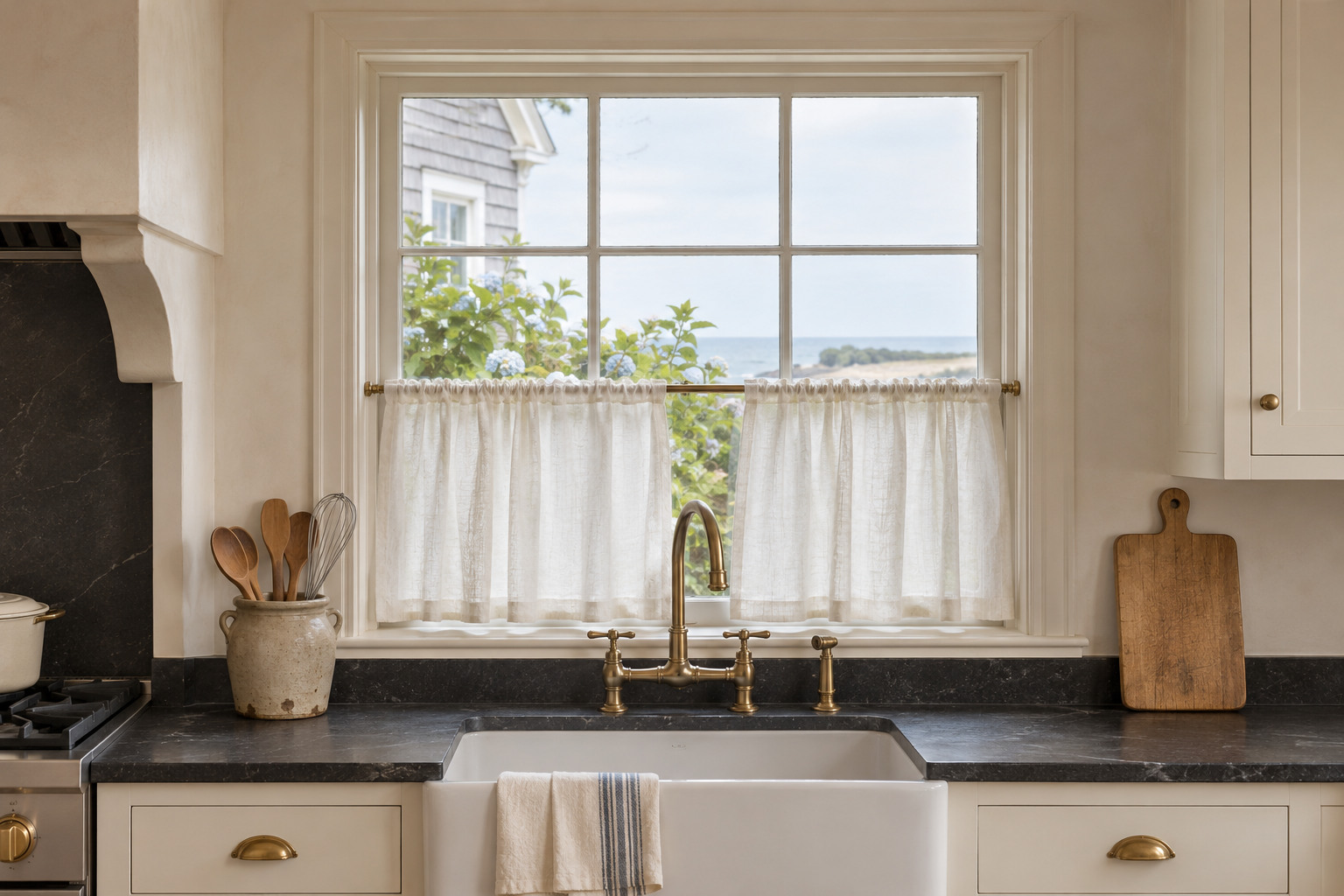
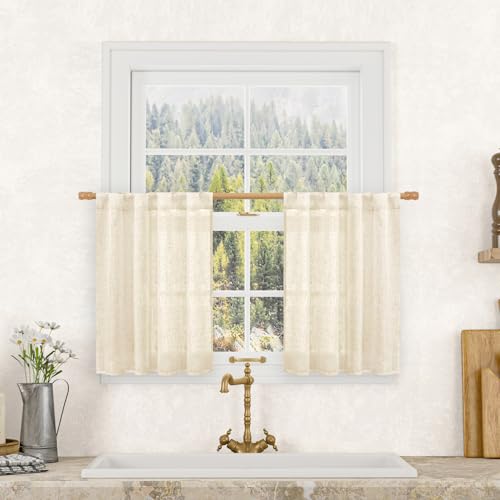
If you already have veined stone, handmade tile or a patterned runner, the window doesn’t need to compete. A semi-sheer white café curtain gives a little texture where the window meets the counter. It looks especially pretty against warm white cabinets and a slim aged-brass rod. I’d leave the upper half of the window bare and keep the sill mostly clear, so you can enjoy the light coming through the fabric.
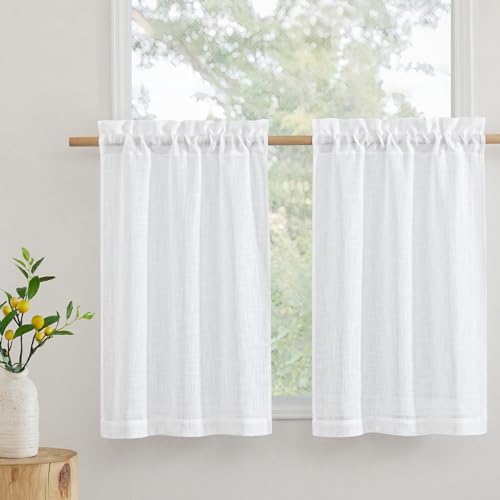
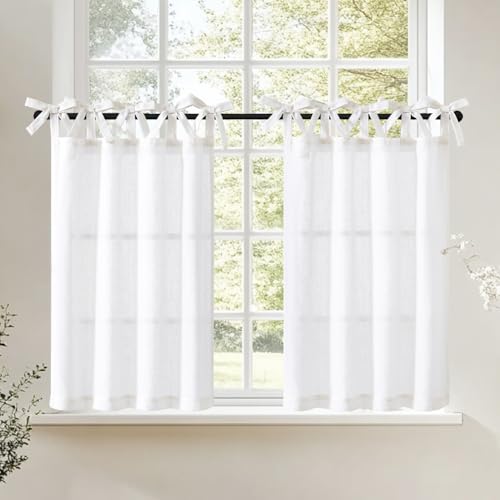
Shop the look: RYB HOME white semi-sheer café curtains. The fabric has a subtle woven line rather than a bold stripe. It’s a good fit if the view matters more than screening the room after dark. If privacy is the reason you’re buying curtains, don’t choose this one on the strength of the daytime photo alone.
I’d start with the simple white set. Try the white tie-top panels if you want the rod to show, or choose the beige panels if the surrounding trim is warmer.
Shop the Look
2. A faded blue stripe for painted cabinets
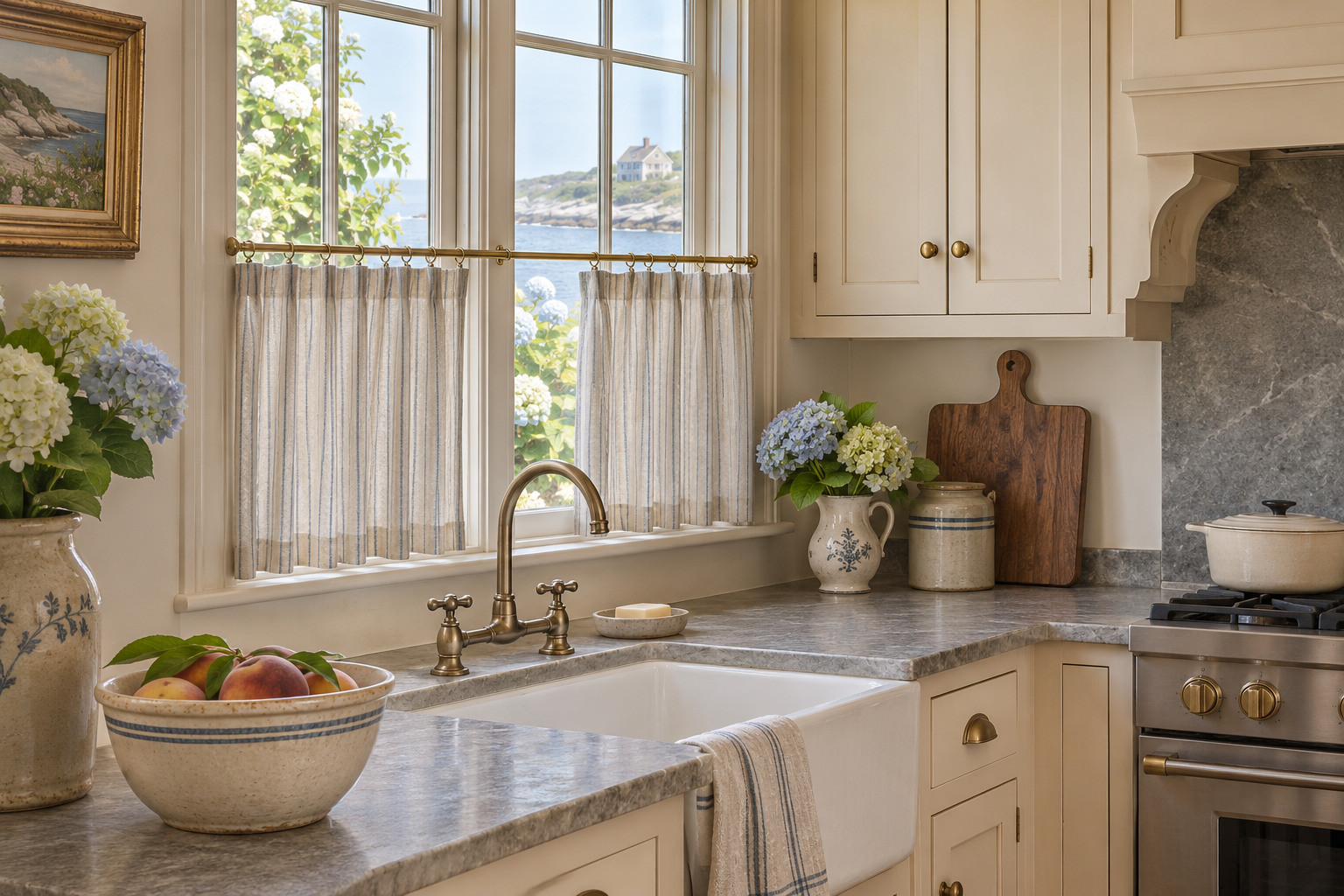
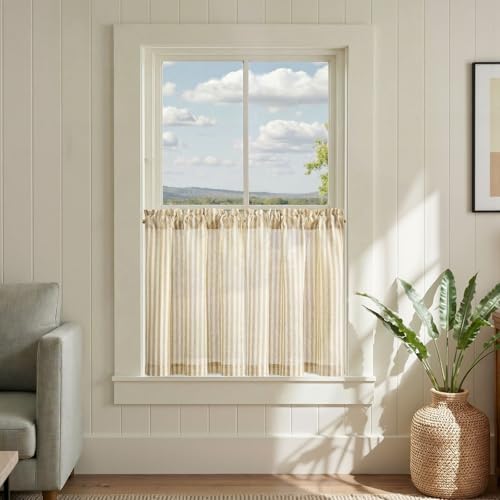
Blue on beige is one of my favorite ways to bring color into a kitchen without painting anything. It has enough definition to hold its own beside cream cabinets or natural oak, but the softer background keeps it from reading like a crisp nautical stripe. Pair it with a small cream pitcher or a wood cutting board; you don’t need a second blue pattern right next to it.
Shop the look: JINCHAN blue-on-beige striped café curtains. The two linen-blend tiers have rod pockets. I’d use the pockets if I wanted the rod to disappear into the gathers, or slim clip rings if I planned to open the panels every morning. Rings change where the hem lands, so measure with the hardware you intend to use.
The blue stripe is my first choice here. The coastal stripe has a little more color; the beige stripe is a quieter alternative.
Shop the Look
3. A small sage floral for a cottage kitchen
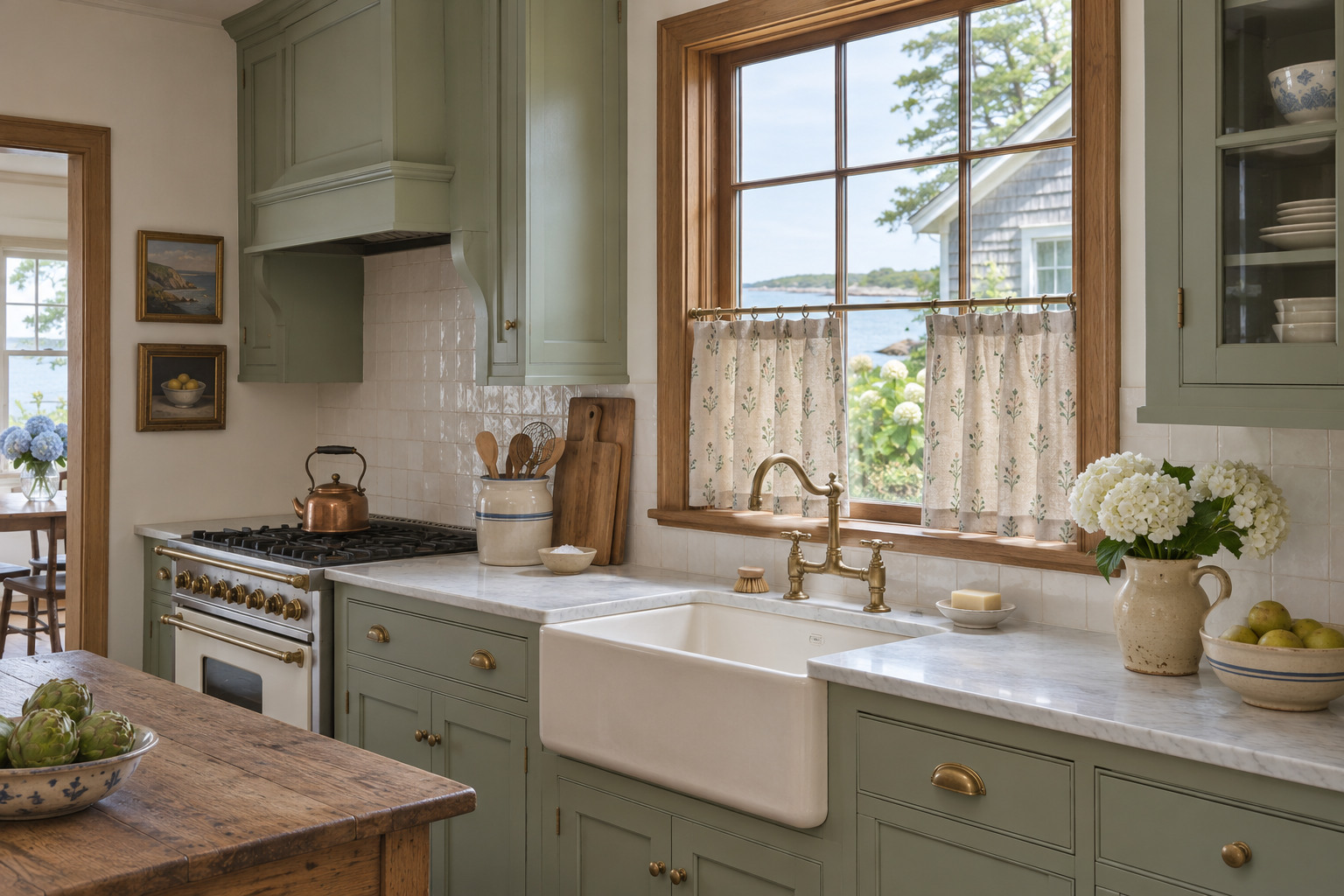
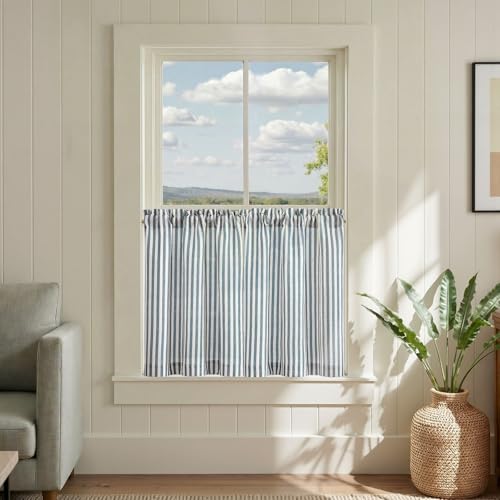
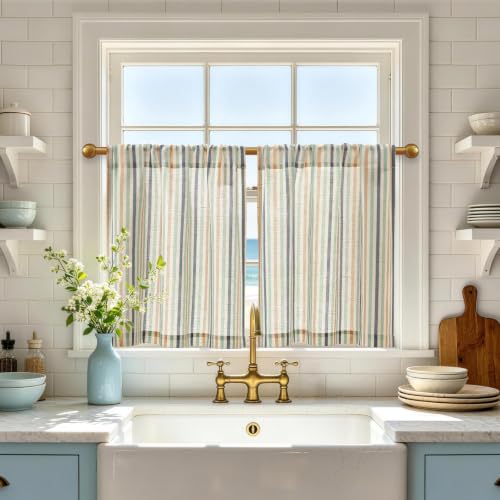
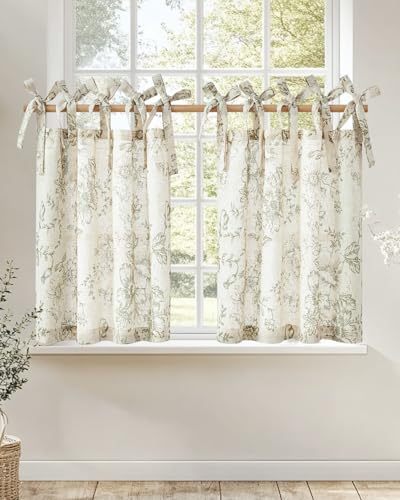
A quiet botanical is a lovely choice when most of the room is solid color. It looks right at home with a porcelain sink, wood knobs or an old brass faucet. Let the fabric be the pattern in that corner. If your backsplash or runner already has a lot going on, take a step back and decide which one you want to notice first. If the answer is the tile, I’d go back to white.
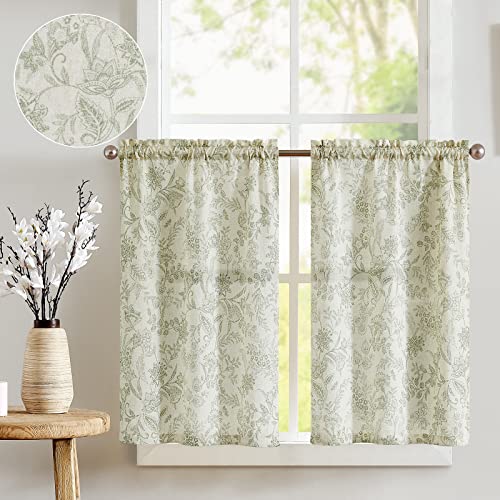
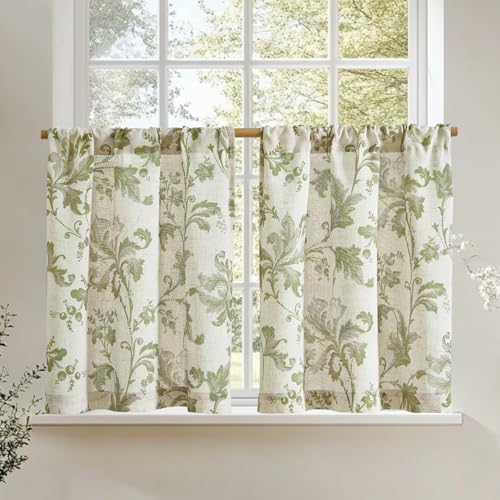
Shop the look: JINCHAN Forest Sage Green on Beige floral café curtains. The muted floral adds more detail than the stripe without making the whole window dark. The sampled listing is a pair of short rod-pocket panels.
Choose Forest Sage for a familiar muted botanical, Baroque Green for a more decorative print, or Alice Green if you want visible ties instead of a hidden pocket.
Shop the Look
How high should you hang kitchen café curtains?
For a window with a natural horizontal divider, start by holding the rod at that line. On a plain window, start around the midpoint. Then stand where you wash dishes and look out. If a walkway or a neighbor’s window is directly across from the sink, you may want the rod a little higher. Check from outside at night with the kitchen lights on before relying on a sheer for privacy.
What to measure before you buy
- Width: Measure where the rod will sit, not the outer edge of the trim unless that’s where you’re mounting it. For soft gathers, start with about 1½ to 2 times that width in combined fabric. A 30-inch opening and two 26-inch panels gives you 52 inches of fabric, a little over 1¾ times the opening.
- Drop: With the rod placement decided, measure to just above the sill, or to the spot where the bottom of the fabric can stay dry and clear of the work surface. For a rod pocket, check whether the listed length includes fabric above the pocket. For ring clips, measure from where the fabric will actually start.
- Clearance: Open the window and work the latch before committing. Check that the curtain won’t brush the faucet or catch on a crank. If there’s a cooktop beside the window, skip loose fabric in that spot.
- Hardware: An inside tension rod gives you a no-drill option when there’s a recess with two sturdy opposing sides. A mounted rod is handy if the trim doesn’t give you enough depth. Confirm rod diameter against the pocket or rings before ordering.
The picks above are sold in 24-inch drops, but 24 inches is not a default measurement. If your sill is closer, buy the length you need or hem the panels rather than mounting the rod higher just to make a stock size work.
If you’re not sure where to begin, I’d choose white for a busy kitchen, the blue stripe for plain cabinets, or sage floral if the window itself is the feature. For more ways to finish this corner, see our warm neutral kitchen ideas and kitchen styling guide.
Shop the Post


